
Payload Information
General Information of This Payload
| Payload ID | PAY0WQTSF |
|||||
|---|---|---|---|---|---|---|
| Name | MMAF |
|||||
| Target | Microtubule (MT) | |||||
| Structure |
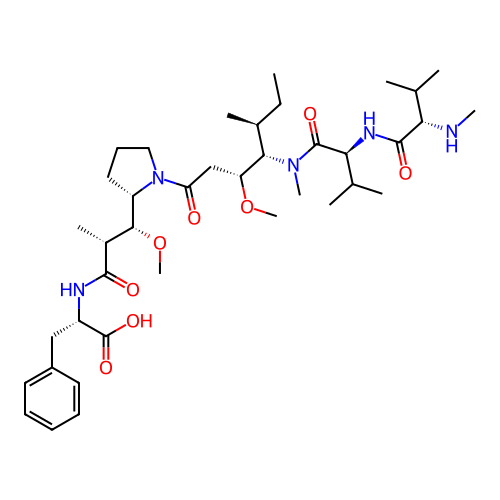
|
|||||
|
|
||||||
Each Antibody-drug Conjugate Related to This Payload
Full Information of The Activity Data of The ADC(s) Related to This Payload
caxmotabart entudotin [Phase 3]
Identified from the Human Clinical Data
| Experiment 1 Reporting the Activity Date of This ADC | [1] | ||||
| Efficacy Data | Objective Response Rate (ORR) |
66.70
42.90 % |
|||
| Patients Enrolled |
Patients with HER2-expresssing advanced solid tumors who had failed prior standard of care therapies.
|
||||
| Administration Dosage |
FS-1502 was given IV once in 21-day or 28-day cycle at doses of 0.10-3.50 mg/kg.
|
||||
Belantamab mafodotin [Approved in 2020 (withdrawn in 2022, approved again in 2025)]
Identified from the Human Clinical Data
| Experiment 1 Reporting the Activity Date of This ADC | [2] | ||||
| Efficacy Data | Objective Response Rate (ORR) |
56.30%
|
High BCMA expression (BCMA +++) | ||
| Patients Enrolled |
Eligible adult (18 years of age) patients for part 2 had histologically or cytologically confirmed MM, Eastern Cooperative Oncology Group performance status 0 or 1, prior therapy with alkylators, proteasome inhibitors and immunomodulators, and were refractory to the last line of treatment.
|
||||
| Administration Dosage |
GSK2857916 3.4 mg/kg was administered through 1-h intravenous infusions once every 3 weeks, for a maximum of 16 cycles.
|
||||
| Related Clinical Trial | |||||
| NCT Number | NCT02064387 | Phase Status | Phase 1 | ||
| Clinical Description |
A Phase I open-label, dose escalation study to investigate the safety, pharmacokinetics, pharmacodynamics, immunogenicity and clinical activity of the antibody drug conjugate GSK2857916 in subjects with relapsed/refractory multiple myeloma and other advanced hematologic malignancies expressing BCMA.
|
||||
| Primary Endpoint |
Objective response rate=60.00% (95% CI 42.10-76.10),comprising 3 (9.00%) complete responses and 14.00 (40%) partial responses.
|
||||
| Other Endpoint |
The median progression-free survival was 12.00 months and the median duration of response was 14.30 months.
|
||||
| Experiment 2 Reporting the Activity Date of This ADC | [3] | ||||
| Efficacy Data | Objective Response Rate (ORR) |
60%
|
|||
| Patients Enrolled |
Histologically or cytologically confirmed MM, a European Cooperative Oncology Group performance status of 0 or 1, prior therapy with alkylators, PI and IMiD, had undergone stem cell transplant (if eligible) and refractory to the last line of treatment (defined as progressive disease on or within 60 days of completion of the last therapy) that included stem cell transplant and those patients with a history of autologous stem cell transplant must have received the transplant >100 days prior to study enrolment and have no active infection.
Click to Show/Hide
|
||||
| Administration Dosage |
Doses ranging between 0.03 mg/kg and 4.60 mg/kg was administered as a 1-hour intravenous infusion every 3 weeks for a maximum of 16 cycles.
|
||||
| Related Clinical Trial | |||||
| NCT Number | NCT02064387 | Phase Status | Phase 1 | ||
| Clinical Description |
A phase 1 open-label, dose escalation study to investigate the safety, pharmacokinetics, pharmacodynamics, immunogenicity and clinical activity of the antibody drug conjugate GSK2857916 in subjects with relapsed/refractory multiple myeloma and other advanced hematologic malignancies expressing BCMA.
|
||||
| Primary Endpoint |
The primary endpoints of the trial were to determine the safety, tolerability, maximum tolerated dose (MTD) and RP2D and schedule of GSK2857916. Median PFS (post hoc analysis) was 7.90 months (95% CI: 3.1-not estimable),Overall response rate at 3.40 mg/kg in Part 2 was 60.00% (21/35; 95% confidence interval: 42.10%-76.10%).
|
||||
| Other Endpoint |
PK profile (single dose area under the curve, maximum serum concentration [Cmax], time to Cmax , clearance, steady-state volume of distribution [Vss], half-life [t]; repeat dose Cmax and trough plasma concentration), the incidence of anti-drug antibodies, and clinical activity measured as overall response rate (ORR), defined as the percentage of subjects achieving confirmed partial response or better (PR) and clinical benefit rate, defined as the percentages of subjects with minimal response or better (MR).
Click to Show/Hide
|
||||
| Experiment 3 Reporting the Activity Date of This ADC | [4] | ||||
| Related Clinical Trial | |||||
| NCT Number | NCT03769506 | Phase Status | Phase 3 | ||
| Clinical Description |
A phase 3, randomized, double-arm, open-label, controlled trial of ASP-1929 photoimmunotherapy versus physician's choice standard of care for the treatment of locoregional, recurrent head and neck squamous cell carcinoma in patients who have failed or progressed on or after at least two lines of therapy, of which at least one line must be systemic therapy.
Click to Show/Hide
|
||||
Revealed Based on the Cell Line Data
| Experiment 1 Reporting the Activity Date of This ADC | [5] | ||||
| Efficacy Data | Half Maximal Effective Concentration (EC50) |
30.6 ug/mL
|
Moderate BCMA expression (BCMA++) | ||
| Method Description |
Cells (5 x 10⁵ cells/mL) were left untreated or exposed to the indicated treatments for the indicated time. Cells were counted on a Vi-Cell-XR Cell Viability Analyzer (Beckman Coulter).
|
||||
| In Vitro Model | Thymoma | EL4 cells (BCMA expression) | CVCL_0255 | ||
AGS-16C3F [Phase 2 (discontinued)]
Identified from the Human Clinical Data
| Experiment 1 Reporting the Activity Date of This ADC | [6] | ||||
| Efficacy Data | Partial Response (PR) |
23.08%
|
High ENPP3 expression (ENPP3+++) | ||
| Patients Enrolled |
Metastatic renal cell carcinoma (MRCC), Eastern Cooperative Oncology Group (ECOG) performance status 1, adequate organ and bone marrow function.
|
||||
| Administration Dosage |
AGS-16M8F was administered intravenously every 3 weeks at 5 dose levels ranging from 0.60 to 4.80 mg/kg until unacceptable toxicity or progression. A second study with AGS-16C3F started with the AGS-16M8F bridging dose of 4.80 mg/kg given every 3 weeks.
|
||||
| Related Clinical Trial | |||||
| NCT Number | NCT01672775 | Phase Status | Phase 1 | ||
| Clinical Description |
A phase 1, open label, multi-center study to assess the safety, pharmacokinetics and effectiveness of AGS-16C3F monotherapy in subjects with renal cell carcinoma (RCC) of clear cell or papillary histology.
|
||||
| Primary Endpoint |
In the AGS-16C3F study (n = 34),the MTD was 3.60 mg/kg,but this was not tolerated. The 1.80 mg/kg dose was determined to be safe and was associated antitumor response.
|
||||
| Other Endpoint |
3 subjects at 1.80 mg/kg achieved durable PR (3/13, 23.08%). The disease control rate at 1.80 mg/kg was 92.30% (N=12/13). The disease control rate for the entire study was 58.82% (N=20/34).
|
||||
| Experiment 2 Reporting the Activity Date of This ADC | [7] | ||||
| Efficacy Data | Objective Response Rate (ORR) |
7.50
18.20 % |
Moderate ENPP3 expression (ENPP3++) | ||
| Patients Enrolled |
Advanced renal cell carcinoma (RCC).
|
||||
| Administration Dosage |
Intravenous AGS-16C3F 1.80 mg/kg every 3 weeks or oral axitinib 5 mg twice daily (starting dose).
|
||||
| Related Clinical Trial | |||||
| NCT Number | NCT02639182 | Phase Status | Phase 2 | ||
| Clinical Description |
A multi-center, open label, randomized phase 2 study of AGS-16C3F vs. axitinib in metastatic renal cell carcinoma.
|
||||
| Primary Endpoint |
Median PFS=2.90 months (95% CI,2.00-4.00) for AGS16C3F,Median PFS=5.7 months (95% CI,5.30-9.10) for axitinib.
|
||||
| Other Endpoint |
Disease Control Rate (DCR)=13.40% (95% CI,6.3-24.0) for AGS16C3F, Disease Control Rate (DCR)=22.70% (95% CI,13.30-34.70) for axitinib. Median duration of Response (mDoR)=6.80 months (95% CI,3.80-18.40) for AGS16C3F, Median duration of Response (mDoR)=6.7 months (95% CI,1.80-9.20) for axitinib. Objective Response Rate (ORR)=7.50% (95% CI,2.50-16.60) for AGS16C3F, Objective Response Rate (ORR)=18.20% (95% CI,9.80-29.60) for axitinib. Median Overall Survival (mOS)=13.10 months for AGS16C3F, Median Overall Survival (mOS)=15.40 months for axitinib.
Click to Show/Hide
|
||||
| Experiment 3 Reporting the Activity Date of This ADC | [9] | ||||
| Efficacy Data | stable disease (SD) |
50%
|
|||
| Patients Enrolled |
Exclusion criteria comprise uncontrolled CNS metastases, investigational drug use within 4 weeks prior, AGS-16C3F hypersensitivity, thromboembolic events (≤3 months), severe cardiac conditions (e.g., CHF Class III/IV), major surgery within 4 weeks, pregnancy/lactation, HIV/hepatitis B/C positivity, active infections requiring systemic treatment, or recent eye surgery/cataracts affecting vision.
Click to Show/Hide
|
||||
| Administration Dosage |
ADCs were given q3w until PD or unacceptable toxicity.AGS-16M8F and AGS-16C3F studies treated 26 and 34 subjects in dose range 0.6 - 4.8 and 1.8 - 4.8 mg/kg, respectively.
|
||||
| Related Clinical Trial | |||||
| NCT Number | NCT01672775 | Phase Status | PHASE1 | ||
| Clinical Description |
A Phase 1, Open Label, Multi-center Study to Assess the Safety, Pharmacokinetics and Effectiveness of AGS-16C3F Monotherapy in Subjects With Renal Cell Carcinoma (RCC) of Clear Cell or Papillary Histology
|
||||
| Primary Endpoint |
The study evaluates the incidence of adverse events over 24 months and assesses pharmacokinetics (TAb, ADC, MMAF) including Ceoi/Cmax, Ctrough, Tmax, AUCτ, t1/2, CL, Vss at specified time points up to Day 92. Secondary endpoints include antidrug antibody formation, tumor response (ORR, DCR), and bone scan changes during the study period.
|
||||
| Other Endpoint |
Eligible participants include metastatic RCC patients (clear cell/non-clear cell or papillary histology) with prior anti-VEGFR therapy (clear cell) or ENPP3+ status (non-clear cell/papillary). Key requirements: measurable disease (RECIST 1.1), ECOG 0-1, adequate hematologic (ANC ≥1.5x10⁹/L, platelet ≥100x109/L, Hb ≥9 g/dL), renal (creatinine ≤1.5xULN or GFR >50 mL/min), and hepatic function (AST/ALT ≤2.5xULN or ≤5xULN with metastases; bilirubin ≤1.5xULN). Contraception is mandated for participants of childbearing potential.
Click to Show/Hide
|
||||
| Experiment 4 Reporting the Activity Date of This ADC | [10] | ||||
| Efficacy Data | Progression Free Survival |
3.5 months
|
|||
| Patients Enrolled |
Exclusion criteria comprised prior axitinib/AGS-16C3F treatment, untreated or unstable brain metastases (>3 months post-radiation/surgery if treated), uncontrolled hypertension (>150/90), GI disorders affecting absorption, active ocular conditions (e.g., infections, corneal ulcers, glaucoma), strong CYP3A4/5 inhibitors/inducers use within 14 days, thromboembolic events (≤4 weeks unless anticoagulated), bleeding disorders (≤2 months), severe cardiac disease (NYHA Class III/IV, MI ≤6 months), major surgery ≤4 weeks, pregnancy/lactation, unresolved infections, or inability to comply with study protocols.
Click to Show/Hide
|
||||
| Administration Dosage |
Participants received 1.8 milligram per kilogram (mg/kg) of AGS-16C3F once every three weeks by single intravenous (IV) infusion.
|
||||
| Related Clinical Trial | |||||
| NCT Number | NCT02639182 | Phase Status | PHASE2 | ||
| Clinical Description |
A Multi-Center, Open Label, Randomized Phase 2 Study of AGS-16C3F vs. Axitinib in Metastatic Renal Cell Carcinoma
|
||||
| Primary Endpoint |
The study assessed Progression-Free Survival (PFS) per RECIST v1.1 by investigator (up to 53 months) and central radiology review (up to 40 months), along with Objective Response Rate (ORR), Duration of Response (DOR), Overall Survival (OS), and Disease Control Rate (DCR). Pharmacokinetic parameters (Cmax, Ctrough, Tmax, AUC0- 21, t1/ 2) for ADC, TAb, and Cys-mcMMAF were evaluated over 21-day cycles. Adverse events (AEs) were monitored for 53 months, with serious AEs requiring intervention or hospitalization.
Click to Show/Hide
|
||||
| Experiment 5 Reporting the Activity Date of This ADC | [9] | ||||
| Efficacy Data | Partial Response (PR) |
8.80%
|
|||
| Patients Enrolled |
Exclusion criteria comprise uncontrolled CNS metastases, investigational drug use within 4 weeks prior, AGS-16C3F hypersensitivity, thromboembolic events (≤3 months), severe cardiac conditions (e.g., CHF Class III/IV), major surgery within 4 weeks, pregnancy/lactation, HIV/hepatitis B/C positivity, active infections requiring systemic treatment, or recent eye surgery/cataracts affecting vision.
Click to Show/Hide
|
||||
| Administration Dosage |
ADCs were given q3w until PD or unacceptable toxicity.AGS-16M8F and AGS-16C3F studies treated 26 and 34 subjects in dose range 0.6 - 4.8 and 1.8 - 4.8 mg/kg, respectively.
|
||||
| Related Clinical Trial | |||||
| NCT Number | NCT01672775 | Phase Status | PHASE1 | ||
| Clinical Description |
A Phase 1, Open Label, Multi-center Study to Assess the Safety, Pharmacokinetics and Effectiveness of AGS-16C3F Monotherapy in Subjects With Renal Cell Carcinoma (RCC) of Clear Cell or Papillary Histology
|
||||
| Primary Endpoint |
The study evaluates the incidence of adverse events over 24 months and assesses pharmacokinetics (TAb, ADC, MMAF) including Ceoi/Cmax, Ctrough, Tmax, AUCτ, t1/2, CL, Vss at specified time points up to Day 92. Secondary endpoints include antidrug antibody formation, tumor response (ORR, DCR), and bone scan changes during the study period.
|
||||
| Other Endpoint |
Eligible participants include metastatic RCC patients (clear cell/non-clear cell or papillary histology) with prior anti-VEGFR therapy (clear cell) or ENPP3+ status (non-clear cell/papillary). Key requirements: measurable disease (RECIST 1.1), ECOG 0-1, adequate hematologic (ANC ≥1.5x10⁹/L, platelet ≥100x109/L, Hb ≥9 g/dL), renal (creatinine ≤1.5xULN or GFR >50 mL/min), and hepatic function (AST/ALT ≤2.5xULN or ≤5xULN with metastases; bilirubin ≤1.5xULN). Contraception is mandated for participants of childbearing potential.
Click to Show/Hide
|
||||
| Experiment 6 Reporting the Activity Date of This ADC | [10] | ||||
| Efficacy Data | Objective Response Rate (ORR) |
7.50%
|
|||
| Patients Enrolled |
Exclusion criteria comprised prior axitinib/AGS-16C3F treatment, untreated or unstable brain metastases (>3 months post-radiation/surgery if treated), uncontrolled hypertension (>150/90), GI disorders affecting absorption, active ocular conditions (e.g., infections, corneal ulcers, glaucoma), strong CYP3A4/5 inhibitors/inducers use within 14 days, thromboembolic events (≤4 weeks unless anticoagulated), bleeding disorders (≤2 months), severe cardiac disease (NYHA Class III/IV, MI ≤6 months), major surgery ≤4 weeks, pregnancy/lactation, unresolved infections, or inability to comply with study protocols.
Click to Show/Hide
|
||||
| Administration Dosage |
Participants received 1.8 milligram per kilogram (mg/kg) of AGS-16C3F once every three weeks by single intravenous (IV) infusion.
|
||||
| Related Clinical Trial | |||||
| NCT Number | NCT02639182 | Phase Status | PHASE2 | ||
| Clinical Description |
A Multi-Center, Open Label, Randomized Phase 2 Study of AGS-16C3F vs. Axitinib in Metastatic Renal Cell Carcinoma
|
||||
| Primary Endpoint |
The study assessed Progression-Free Survival (PFS) per RECIST v1.1 by investigator (up to 53 months) and central radiology review (up to 40 months), along with Objective Response Rate (ORR), Duration of Response (DOR), Overall Survival (OS), and Disease Control Rate (DCR). Pharmacokinetic parameters (Cmax, Ctrough, Tmax, AUC0- 21, t1/ 2) for ADC, TAb, and Cys-mcMMAF were evaluated over 21-day cycles. Adverse events (AEs) were monitored for 53 months, with serious AEs requiring intervention or hospitalization.
Click to Show/Hide
|
||||
| Experiment 7 Reporting the Activity Date of This ADC | [10] | ||||
| Efficacy Data | Disease control rate (DCR) |
13.40%
|
|||
| Patients Enrolled |
Exclusion criteria comprised prior axitinib/AGS-16C3F treatment, untreated or unstable brain metastases (>3 months post-radiation/surgery if treated), uncontrolled hypertension (>150/90), GI disorders affecting absorption, active ocular conditions (e.g., infections, corneal ulcers, glaucoma), strong CYP3A4/5 inhibitors/inducers use within 14 days, thromboembolic events (≤4 weeks unless anticoagulated), bleeding disorders (≤2 months), severe cardiac disease (NYHA Class III/IV, MI ≤6 months), major surgery ≤4 weeks, pregnancy/lactation, unresolved infections, or inability to comply with study protocols.
Click to Show/Hide
|
||||
| Administration Dosage |
Participants received 1.8 milligram per kilogram (mg/kg) of AGS-16C3F once every three weeks by single intravenous (IV) infusion.
|
||||
| Related Clinical Trial | |||||
| NCT Number | NCT02639182 | Phase Status | PHASE2 | ||
| Clinical Description |
A Multi-Center, Open Label, Randomized Phase 2 Study of AGS-16C3F vs. Axitinib in Metastatic Renal Cell Carcinoma
|
||||
| Primary Endpoint |
The study assessed Progression-Free Survival (PFS) per RECIST v1.1 by investigator (up to 53 months) and central radiology review (up to 40 months), along with Objective Response Rate (ORR), Duration of Response (DOR), Overall Survival (OS), and Disease Control Rate (DCR). Pharmacokinetic parameters (Cmax, Ctrough, Tmax, AUC0- 21, t1/ 2) for ADC, TAb, and Cys-mcMMAF were evaluated over 21-day cycles. Adverse events (AEs) were monitored for 53 months, with serious AEs requiring intervention or hospitalization.
Click to Show/Hide
|
||||
Discovered Using Cell Line-derived Xenograft Model
| Experiment 1 Reporting the Activity Date of This ADC | [8] | ||||
| Efficacy Data | Half Maximal Inhibitory Concentration (IC50) |
1.1 nM
|
|||
| Method Description |
Cells were incubated in triplicate in medium containing AGS-16C3F or cHmLYS-1c3.G2k-mcMMAF (0 [Control],0.001,0.003,0.008,0.02,0.07,0.21,0.62,1.82,5.57,16.67,50,150,450,and 1350 nM) in a 5% CO2 incubator at 37°C for 96 hours. IC50 values at day 5 for AGS-16C3F were calculated for each cell line.
|
||||
| In Vitro Model | Normal | ROSA KIT D816V cells | CVCL_5G50 | ||
| Experiment 2 Reporting the Activity Date of This ADC | [8] | ||||
| Efficacy Data | Half Maximal Inhibitory Concentration (IC50) |
2.73 nM
|
Moderate ENPP3 expression (ENPP3++) | ||
| Method Description |
Cells were incubated in triplicate in medium containing AGS-16C3F or cHmLYS-1c3.G2k-mcMMAF (0 [Control],0.001,0.003,0.008,0.02,0.07,0.21,0.62,1.82,5.57,16.67,50,150,450,and 1350 nM) in a 5% CO2 incubator at 37°C for 96 hours. IC50 values at day 5 for AGS-16C3F were calculated for each cell line.
|
||||
| In Vitro Model | Mast-cell sarcoma | ROSA KIT D816V Gluc cells | Homo sapiens | ||
| Experiment 3 Reporting the Activity Date of This ADC | [8] | ||||
| Efficacy Data | Half Maximal Inhibitory Concentration (IC50) |
109.9 nM
|
High ENPP3 expression (ENPP3+++) | ||
| Method Description |
Cells were incubated in triplicate in medium containing AGS-16C3F or cHmLYS-1c3.G2k-mcMMAF (0 [Control],0.001,0.003,0.008,0.02,0.07,0.21,0.62,1.82,5.57,16.67,50,150,450,and 1350 nM) in a 5% CO2 incubator at 37°C for 96 hours. IC50 values at day 5 for AGS-16C3F were calculated for each cell line.
|
||||
| In Vitro Model | Mast cell leukemia | HMC-1.1 cells | CVCL_H206 | ||
| Experiment 4 Reporting the Activity Date of This ADC | [8] | ||||
| Efficacy Data | Half Maximal Inhibitory Concentration (IC50) |
146.5 nM
|
|||
| Method Description |
Cells were incubated in triplicate in medium containing AGS-16C3F or cHmLYS-1c3.G2k-mcMMAF (0 [Control],0.001,0.003,0.008,0.02,0.07,0.21,0.62,1.82,5.57,16.67,50,150,450,and 1350 nM) in a 5% CO2 incubator at 37°C for 96 hours. IC50 values at day 5 for AGS-16C3F were calculated for each cell line.
|
||||
| In Vitro Model | Mast cell leukemia | HMC-1.2 cells | CVCL_H205 | ||
Depatuxizumab mafodotin [Phase 3 (discontinued)]
Identified from the Human Clinical Data
| Experiment 1 Reporting the Activity Date of This ADC | [11] | ||||
| Efficacy Data | Median progression-free survival (mPFS) |
8.0 (depatux-m group); 6.3 (placebo group) Months
|
High EGFR expression (EGFR +++) | ||
| Patients Enrolled |
EGFR-amp newly diagnosed GBM were randomized 1:1 to radiotherapy, temozolomide, and depatux-m/placebo.
|
||||
| Administration Dosage |
Depatux-m was dosed at 2.0 mg/kg during RT, then 1.25 mg/kg thereafter on days 1 and 15/28, 19,21 and allowed to continue until disease progression.
|
||||
| Experiment 2 Reporting the Activity Date of This ADC | [11] | ||||
| Efficacy Data | Median Overall Survival (mOS) |
18.9 (depatux-m group); 18.7(placebo group) Months
|
High EGFR expression (EGFR +++) | ||
| Patients Enrolled |
EGFR-amp newly diagnosed GBM were randomized 1:1 to radiotherapy, temozolomide, and depatux-m/placebo.
|
||||
| Administration Dosage |
Depatux-m was dosed at 2.0 mg/kg during RT, then 1.25 mg/kg thereafter on days 1 and 15/2819, 21 and allowed to continue until disease progression.
|
||||
| Experiment 3 Reporting the Activity Date of This ADC | [13] | ||||
| Efficacy Data | Progression Free Survival |
2.1 months
|
|||
| Patients Enrolled |
Japanese participants with WHO grade III or IV malignant glioma
|
||||
| Administration Dosage |
ABT-414 administered every other weeks monotherapy
|
||||
| Related Clinical Trial | |||||
| NCT Number | NCT02590263 | Phase Status | PHASE1|||PHASE2 | ||
| Clinical Description |
A Non-Randomized, Open-Label, Multi-Center Phase 1/2 Study Evaluating the Safety, Pharmacokinetics and Efficacy of ABT-414 in Japanese Subjects With Malignant Glioma
|
||||
| Primary Endpoint |
For all patients in the 2L Depatux-M + CT arm, the 6-month PFS estimate by central review was 25.6% (95% CI 11.4-42.6) with a median PFS of 2.1 months (95% CI 1.9-3.9; Figure 3 A, B). The 6-month OS estimate was 89.7% (95% CI 71.3-96.5), and the median OS was 14.7 months (95% CI 10.7-15.4; Figure 4). ORR, analyzed in patients with at least one measurable disease at baseline, was 21.7% (5/23) by central review with all responses being PR and the median DoR was 5.5 months (95% CI 1.9-NE; Table 6). Seven patients were considered to have 6-month PFS by investigator review, but not by central review.
Click to Show/Hide
|
||||
| Other Endpoint |
Objective Response Rate [Time Frame: At each visit for approximately 1 year], Overall Survival [Time Frame: At each visit for approximately 1 year], Duration of Overall Response [Time Frame: At each visit for approximately 1 year]
|
||||
| Experiment 4 Reporting the Activity Date of This ADC | [13] | ||||
| Efficacy Data | Overall suvival (OS) |
14.7 months
|
|||
| Patients Enrolled |
Japanese participants with WHO grade III or IV malignant glioma
|
||||
| Administration Dosage |
ABT-414 administered every other weeks monotherapy
|
||||
| Related Clinical Trial | |||||
| NCT Number | NCT02590263 | Phase Status | PHASE1|||PHASE2 | ||
| Clinical Description |
A Non-Randomized, Open-Label, Multi-Center Phase 1/2 Study Evaluating the Safety, Pharmacokinetics and Efficacy of ABT-414 in Japanese Subjects With Malignant Glioma
|
||||
| Primary Endpoint |
For all patients in the 2L Depatux-M + CT arm, the 6-month PFS estimate by central review was 25.6% (95% CI 11.4-42.6) with a median PFS of 2.1 months (95% CI 1.9-3.9; Figure 3 A, B). The 6-month OS estimate was 89.7% (95% CI 71.3-96.5), and the median OS was 14.7 months (95% CI 10.7-15.4; Figure 4). ORR, analyzed in patients with at least one measurable disease at baseline, was 21.7% (5/23) by central review with all responses being PR and the median DoR was 5.5 months (95% CI 1.9-NE; Table 6). Seven patients were considered to have 6-month PFS by investigator review, but not by central review.
Click to Show/Hide
|
||||
| Other Endpoint |
Objective Response Rate [Time Frame: At each visit for approximately 1 year], Overall Survival [Time Frame: At each visit for approximately 1 year], Duration of Overall Response [Time Frame: At each visit for approximately 1 year]
|
||||
| Experiment 5 Reporting the Activity Date of This ADC | [14] | ||||
| Efficacy Data | Overall suvival (OS) |
15.5 months
|
|||
| Patients Enrolled |
Must have a clinical diagnosis of glioblastoma (GBM).
|
||||
| Administration Dosage |
Depatuxizumab mafodotin is given on Day 1 of Week 1, 3 and 5 along with the standard therapy of TMZ and radiation during the chemoradiation phase. Depatuxizumab mafodotin is given on Day 1 and 15 of each cycle along with TMZ (Days 1-5 of each cycle) per standard of care during the adjuvant phase.
|
||||
| Related Clinical Trial | |||||
| NCT Number | NCT02573324 | Phase Status | PHASE3 | ||
| Clinical Description |
A Randomized, Placebo Controlled Phase 3 Study of ABT-414 With Concurrent Chemoradiation and Adjuvant Temozolomide in Subjects With Newly Diagnosed Glioblastoma (GBM) With Epidermal Growth Factor Receptor (EGFR) Amplification (Intellance1)
|
||||
| Primary Endpoint |
Overall Survival (OS) [Time Frame: Overall median duration of follow-up was 15.5 months (range: 0.1, 35.6).]
|
||||
| Other Endpoint |
OS for the O6-methylguaninemethlytransferese (MGMT) Unmethylated Group [Time Frame: Overall median duration of follow-up was 15.5 months (range: 0.1, 35.6).]
|
||||
| Experiment 6 Reporting the Activity Date of This ADC | [13] | ||||
| Efficacy Data | During of response (DoR) |
5.5 months
|
|||
| Patients Enrolled |
Japanese participants with WHO grade III or IV malignant glioma
|
||||
| Administration Dosage |
ABT-414 administered every other weeks monotherapy
|
||||
| Related Clinical Trial | |||||
| NCT Number | NCT02590263 | Phase Status | PHASE1|||PHASE2 | ||
| Clinical Description |
A Non-Randomized, Open-Label, Multi-Center Phase 1/2 Study Evaluating the Safety, Pharmacokinetics and Efficacy of ABT-414 in Japanese Subjects With Malignant Glioma
|
||||
| Primary Endpoint |
For all patients in the 2L Depatux-M + CT arm, the 6-month PFS estimate by central review was 25.6% (95% CI 11.4-42.6) with a median PFS of 2.1 months (95% CI 1.9-3.9; Figure 3 A, B). The 6-month OS estimate was 89.7% (95% CI 71.3-96.5), and the median OS was 14.7 months (95% CI 10.7-15.4; Figure 4). ORR, analyzed in patients with at least one measurable disease at baseline, was 21.7% (5/23) by central review with all responses being PR and the median DoR was 5.5 months (95% CI 1.9-NE; Table 6). Seven patients were considered to have 6-month PFS by investigator review, but not by central review.
Click to Show/Hide
|
||||
| Other Endpoint |
Objective Response Rate [Time Frame: At each visit for approximately 1 year], Overall Survival [Time Frame: At each visit for approximately 1 year], Duration of Overall Response [Time Frame: At each visit for approximately 1 year]
|
||||
| Experiment 7 Reporting the Activity Date of This ADC | [15] | ||||
| Patients Enrolled |
Subjects must have a solid tumor type likely to over-express Epidermal Growth Factor Receptor (EGFR) (Phase 1)
|
||||
| Administration Dosage |
Data from patients who received ABT-414 monotherapy at a dose of 1-4 mg/kg once every 3 weeks or 1 or 1.5 mg/kg weekly for 2 out of every 3 weeks (alternate schedule) by intravenous infusion were included in the analysis of triplicate 12-lead ECGs obtained before dosing and through 168 h after dosing.
|
||||
| Related Clinical Trial | |||||
| NCT Number | NCT01741727 | Phase Status | PHASE1 | ||
| Clinical Description |
A Phase 1/2 Study Evaluating the Safety, Pharmacokinetics and Efficacy of ABT-414 in Subjects With Advanced Solid Tumors Likely to Over-Express the Epidermal Growth Factor Receptor (EGFR)
|
||||
| Primary Endpoint |
Phase 1 - Safety (Number of subjects with adverse events and/or dose limiting toxicities) [Time Frame: Every 1-3 weeks for an average of 20 weeks]
|
||||
| Other Endpoint |
Phase 2- Safety (Scheduled study visits occurring on average every 3 weeks) [Time Frame: Followed on average every 3 weeks for approximately 20 weeks]
|
||||
| Experiment 8 Reporting the Activity Date of This ADC | [16] | ||||
| Patients Enrolled |
Histologically confirmed de novo (primary) glioblastoma with unequivocal tumor progression or recurrence.
|
||||
| Administration Dosage |
intravenous administration (1.25 mg/kg or 1.0 mg/kg body weight) over 30 to 40 minutes once every 2 weeks until one of the treatment withdrawal criteria was met. The dose was 1.25 mg/kg in the original protocol (Version 1) and Version 2, Amendment 1, and was lowered to 1.0 mg/kg in protocol Version 3, Amendment 2. Pediatric participants: Intravenous administration (1.0 mg/kg body weight for those who were 6 to 17 years old at the date of first dose, or 1.3 mg/kg for those who were 0 to 5 years old) over 30 to 40 minutes or as directed by the guidelines once every 2 weeks until one of the treatment withdrawal criteria was met, for a maximum of one year. If used in combination with temozolomide, depatuxizumab mafodotin was dosed on Day 1 and Day 15 of the TMZ cycle (assuming a standard regimen of 200 mg/m^2/day for 5 days of each 28-day cycle; for other TMZ schedules, timing of the depatuxizumab mafodotin dosing schedule were to be discussed with the medical monitor).
Click to Show/Hide
|
||||
| Related Clinical Trial | |||||
| NCT Number | NCT02343406 | Phase Status | PHASE2 | ||
| Clinical Description |
INTELLANCE-2: ABT-414 Alone or ABT-414 Plus Temozolomide Versus Lomustine or Temozolomide for Recurrent Glioblastoma: A Randomized Phase 2 Study of the EORTC Brain Tumor Group
|
||||
| Primary Endpoint |
Overall Survival (OS); Progression-Free Survival (PFS)
|
||||
| Other Endpoint |
Objective Response Rate (ORR); Overall Survival in the Subgroup With Epidermal Growth Factor Receptor (EGFRvIII) Mutation
|
||||
| Experiment 9 Reporting the Activity Date of This ADC | [17] | ||||
| Patients Enrolled |
Newly diagnosed glioblastoma (GBM) histologically proven, World Health Organization (WHO) grade IV GBM or WHO grade IV gliosarcoma
|
||||
| Administration Dosage |
During the Chemoradiation Phase, participants were to receive depatuxizumab mafodotin at 2.0 mg/kg IV infusion over 30 - 40 minutes once every 2 weeks (Day 1 of Weeks 1, 3, and 5 of the 6-week regimen). During the Adjuvant Therapy Phase, participants were to receive depatuxizumab mafodotin at 1.25 mg/kg on Day 1 (± 2 days) and Day 15 (± 2 days) of each 28-day cycle as a 30 - 40 minute infusion for 12 cycles.
Click to Show/Hide
|
||||
| Related Clinical Trial | |||||
| NCT Number | NCT03419403 | Phase Status | PHASE3 | ||
| Clinical Description |
Phase 3b Study for Management of Ocular Side Effects in Subjects With EGFR-amplified Glioblastoma Receiving Depatuxizumab Mafodotin (ABT-414)
|
||||
| Primary Endpoint |
Percentage of Participants Who Required a Change in Ocular Side Effect (OSE) Management [Time Frame: Within 8 weeks after the initial dose of depatuxizumab mafodotin]
|
||||
| Other Endpoint |
Maximum Change From Baseline on the Logarithm of the Minimum Angle of Resolution (LogMAR) Scale; Time to Bandage Contact Lens (BCL) Intervention; Number of Participants With Depatuxizumab Mafodotin Dose Modifications Due to Ocular Side Effects (OSE)
|
||||
| Experiment 10 Reporting the Activity Date of This ADC | [18] | ||||
| Patients Enrolled |
Glioblastoma Multiforme (GBM)
|
||||
| Administration Dosage |
ABT-414 will be administered by intravenous infusion
|
||||
| Related Clinical Trial | |||||
| NCT Number | NCT01800695 | Phase Status | PHASE1 | ||
| Clinical Description |
A Phase 1 Study Evaluating the Safety and Pharmacokinetics of ABT-414 for Subjects With Glioblastoma Multiforme
|
||||
| Primary Endpoint |
Number and percentage of participants with adverse events
|
||||
| Other Endpoint |
Biomarker EGFR expression, Progression Free Survival, Overall Survival
|
||||
| Experiment 11 Reporting the Activity Date of This ADC | [19] | ||||
| Patients Enrolled |
Participant must have epidermal growth factor receptor (EGFR) amplification or EGFRvIII mutation.
|
||||
| Related Clinical Trial | |||||
| NCT Number | NCT03123952 | Phase Status | N.A. | ||
| Clinical Description |
This is an expanded access program (EAP) for eligible participants. This program is designed to provide access to ABT-414 prior to approval by the local regulatory agency. Availability will depend on territory eligibility. Participating sites will be added as they apply for and are approved for the EAP. A medical doctor must decide whether the potential benefit outweighs the risk of receiving an investigational therapy based on the individual patient's medical history and program eligibility criteria.
Click to Show/Hide
|
||||
Revealed Based on the Cell Line Data
| Experiment 1 Reporting the Activity Date of This ADC | [12] | ||||
| Efficacy Data | Tumor Growth Inhibition value (TGI) | ≈ 87.50% | Positive EGFR expression (EGFR+++/++) | ||
| Method Description |
To establish xenografts, 2 x 10⁶ MSTO-211H cells mixed with 75-uL Matrigel were injected subcutaneously in the right flank of 5 to 6-week-old female BALB/c nu/nu miceFor the MSTO-211H study, mice received either ABT-414, ABBV-221 or ADC control (3 mg/kg) every 4 days.
|
||||
| In Vivo Model | MSTO-211H CDX model | ||||
| In Vitro Model | Pleural biphasic mesothelioma | MSTO-211H cells | CVCL_1430 | ||
| Experiment 2 Reporting the Activity Date of This ADC | [12] | ||||
| Efficacy Data | Half Maximal Inhibitory Concentration (IC50) |
10.00 - 35.00 ug/mL
|
Positive EGFR expression (EGFR+++/++) | ||
| Method Description |
Cells lines were plated at 1,000-3,000 cells per well in complete growth medium containing 10% FCS in 96-well plates and allowed to adhere overnight.
|
||||
| In Vitro Model | Pleural mesothelioma | NCI-H2052 cells | CVCL_1518 | ||
| Experiment 3 Reporting the Activity Date of This ADC | [12] | ||||
| Efficacy Data | Half Maximal Inhibitory Concentration (IC50) |
10.00 - 35.00 ug/mL
|
Positive EGFR expression (EGFR+++/++) | ||
| Method Description |
Cells lines were plated at 1,000-3,000 cells per well in complete growth medium containing 10% FCS in 96-well plates and allowed to adhere overnight.
|
||||
| In Vitro Model | Pleural mesothelioma | NCI-H2052 cells | CVCL_1518 | ||
| Experiment 4 Reporting the Activity Date of This ADC | [12] | ||||
| Efficacy Data | Half Maximal Inhibitory Concentration (IC50) |
10.00 - 35.00 ug/mL
|
Positive EGFR expression (EGFR+++/++) | ||
| Method Description |
Cells lines were plated at 1,000-3,000 cells per well in complete growth medium containing 10% FCS in 96-well plates and allowed to adhere overnight.
|
||||
| In Vitro Model | Pleural mesothelioma | NCI-H28 cells | CVCL_1555 | ||
| Experiment 5 Reporting the Activity Date of This ADC | [12] | ||||
| Efficacy Data | Half Maximal Inhibitory Concentration (IC50) |
10.00 - 35.00 ug/mL
|
Positive EGFR expression (EGFR+++/++) | ||
| Method Description |
Cells lines were plated at 1,000-3,000 cells per well in complete growth medium containing 10% FCS in 96-well plates and allowed to adhere overnight.
|
||||
| In Vitro Model | Pleural biphasic mesothelioma | MSTO-211H cells | CVCL_1430 | ||
MEDI-547 [Phase 1 (discontinued)]
Identified from the Human Clinical Data
| Experiment 1 Reporting the Activity Date of This ADC | [20] | ||||
| Efficacy Data | Objective Response Rate (ORR) |
0%
|
|||
| Patients Enrolled |
Malignant solid tumor thought to be associated with increased expression of EphA2 (endometrial, breast, ovarian, prostate, non-small cell lung, colon, esophageal, gastric, and bladder cancers, renal cell carcinoma, melanoma), relapsed or refractory to standard therapy, and an Eastern Cooperative Oncology Group (ECOG) performance status score of 0-2.
Click to Show/Hide
|
||||
| Administration Dosage |
0.08 mg/kg, 1-h intravenous (IV) infusion once q3wks or qwk for 3 consecutive weeks until unacceptable toxicity, progressive disease.
|
||||
| Related Clinical Trial | |||||
| NCT Number | NCT00796055 | Phase Status | Phase 1 | ||
| Clinical Description |
A phase 1, open-label study of MEDI-547 to evaluate the safety, tolerability, pharmacokinetics, and biologic activity of intravenous administration in subjects with relapsed or refractory solid tumors associated with epha2 expression.
|
||||
| Primary Endpoint |
Best response included progressive disease (n=5, 83.33%) and stable disease (n=1, 16.67%), No complete or partial tumor responses.
|
||||
| Other Endpoint |
MTD could not be selected.
|
||||
| Experiment 2 Reporting the Activity Date of This ADC | [24] | ||||
| Efficacy Data | stable disease (SD) |
16.70%
|
|||
| Patients Enrolled |
Eligible patients must have relapsed/refractory solid tumors (ovarian, prostate, NSCLC, etc.) with prior histologic confirmation, ECOG 0-2, adequate organ function, and measurable disease (for dose expansion). Exclusions include uncontrolled CNS metastases, active infections, significant cardiac history, recent stroke/TIA, uncontrolled hypertension, anticoagulant use, and pregnancy/lactation. Prior therapies must be completed ≥30 days before enrollment.
Click to Show/Hide
|
||||
| Administration Dosage |
All 6 patients were exposed to MEDI-547 at a dose of 0.08 mg/kg once every 3 weeks.
|
||||
| Related Clinical Trial | |||||
| NCT Number | NCT00796055 | Phase Status | PHASE1 | ||
| Clinical Description |
A Phase 1, Open-Label Study of MEDI-547 to Evaluate the Safety, Tolerability, Pharmacokinetics, and Biologic Activity of Intravenous Administration in Subjects With Relapsed or Refractory Solid Tumors Associated With EphA2 Expression
|
||||
| Primary Endpoint |
The safety and tolerability of MEDI-547 will be evaluated through monitoring adverse events (AEs), serious AEs (SAEs), lab abnormalities, physical exam changes, treatment discontinuations due to toxicity, and drug-related deaths during treatment and up to 30 days post-treatment.
|
||||
| Other Endpoint |
Antitumor activity will be assessed via objective response rate (ORR), time to response (TTR), duration of response (DR), time to progression (TTP), progression-free survival (PFS), and overall survival (OS), with measurements continuing until 30 days after the last MEDI-547 dose.
|
||||
| Experiment 3 Reporting the Activity Date of This ADC | [24] | ||||
| Efficacy Data | progressive disease (PD) |
83.30%
|
|||
| Patients Enrolled |
Eligible patients must have relapsed/refractory solid tumors (ovarian, prostate, NSCLC, etc.) with prior histologic confirmation, ECOG 0-2, adequate organ function, and measurable disease (for dose expansion). Exclusions include uncontrolled CNS metastases, active infections, significant cardiac history, recent stroke/TIA, uncontrolled hypertension, anticoagulant use, and pregnancy/lactation. Prior therapies must be completed ≥30 days before enrollment.
Click to Show/Hide
|
||||
| Administration Dosage |
All 6 patients were exposed to MEDI-547 at a dose of 0.08 mg/kg once every 3 weeks.
|
||||
| Related Clinical Trial | |||||
| NCT Number | NCT00796055 | Phase Status | PHASE1 | ||
| Clinical Description |
A Phase 1, Open-Label Study of MEDI-547 to Evaluate the Safety, Tolerability, Pharmacokinetics, and Biologic Activity of Intravenous Administration in Subjects With Relapsed or Refractory Solid Tumors Associated With EphA2 Expression
|
||||
| Primary Endpoint |
The safety and tolerability of MEDI-547 will be evaluated through monitoring adverse events (AEs), serious AEs (SAEs), lab abnormalities, physical exam changes, treatment discontinuations due to toxicity, and drug-related deaths during treatment and up to 30 days post-treatment.
|
||||
| Other Endpoint |
Antitumor activity will be assessed via objective response rate (ORR), time to response (TTR), duration of response (DR), time to progression (TTP), progression-free survival (PFS), and overall survival (OS), with measurements continuing until 30 days after the last MEDI-547 dose.
|
||||
Discovered Using Cell Line-derived Xenograft Model
| Experiment 1 Reporting the Activity Date of This ADC | [21] | ||||
| Efficacy Data | Tumor Growth Inhibition value (TGI) | ≈ 48% | Negative EPHA2 expression (EPHA2-) | ||
| Method Description |
Mice injected with EphA2-negative SPEC-2 cell was assigned to one of four groups (n = 10 mice per group),MEDI-547,3 mg/kg weekly.
|
||||
| In Vivo Model | Endometrial cancer CDX model | ||||
| In Vitro Model | Endometrial cancer | Endometrial cancer cells | Homo sapiens | ||
| Experiment 2 Reporting the Activity Date of This ADC | [21] | ||||
| Efficacy Data | Tumor Growth Inhibition value (TGI) | ≈ 86.67% | Positive EPHA2 expression (EPHA2+++/++) | ||
| Method Description |
Mice injected with either Hec-1A or Ishikawa were assigned to one of four groups (n = 10 mice per group),MEDI-547,3 mg/kg weekly.
|
||||
| In Vivo Model | Endometrial cancer CDX model | ||||
| In Vitro Model | Endometrial adenocarcinoma | HEC-1-A cells | CVCL_0293 | ||
| Experiment 3 Reporting the Activity Date of This ADC | [21] | ||||
| Efficacy Data | Tumor Growth Inhibition value (TGI) | ≈ 92% | Positive EPHA2 expression (EPHA2+++/++) | ||
| Method Description |
Mice injected with either Hec-1A or Ishikawa were assigned to one of four groups (n = 10 mice per group),MEDI-547,3 mg/kg weekly.
|
||||
| In Vivo Model | Endometrial cancer CDX model | ||||
| In Vitro Model | Endometrial adenocarcinoma | Ishikawa cells | CVCL_2529 | ||
PF-06263507 [Phase 1 (discontinued)]
Discovered Using Cell Line-derived Xenograft Model
| Experiment 1 Reporting the Activity Date of This ADC | [22] | ||||
| Efficacy Data | Tumor Growth Inhibition value (TGI) | ≈ 71.70% | Low 5T4 expression (5T4+) | ||
| Method Description |
ASN004 was evaluated for efficacy in human tumor mouse xenograft models,derived from four different human tumor cell types,having a wide range of 5T4 expression levels. ASN004 was further evaluated in a tumor xenograft model derived from the H1975 human lung carcinoma cell line [5T4+; 15, 800 binding sites per cell]. Subcutaneous tumor xenografts were developed in nude mice with established mean tumor volumes of 150 mm3. The dose of PF-06263507 was 3 mg/kg Q4D 4.
Click to Show/Hide
|
||||
| In Vivo Model | Lung cancer CDX model | ||||
| In Vitro Model | Lung cancer | Lung cancer cells | Homo sapiens | ||
| Experiment 2 Reporting the Activity Date of This ADC | [22] | ||||
| Efficacy Data | Tumor Growth Inhibition value (TGI) | ≈ 100% | Low 5T4 expression (5T4+) | ||
| Method Description |
ASN004 was evaluated for efficacy in human tumor mouse xenograft models,derived from four different human tumor cell types,having a wide range of 5T4 expression levels. ASN004 was further evaluated in a tumor xenograft model derived from the H1975 human lung carcinoma cell line [5T4+; 15, 800 binding sites per cell]. Subcutaneous tumor xenografts were developed in nude mice with established mean tumor volumes of 150 mm3. The dose of PF-06263507 was 10 mg/kg Q4D 4.
Click to Show/Hide
|
||||
| In Vivo Model | Lung cancer CDX model | ||||
| In Vitro Model | Lung cancer | Lung cancer cells | Homo sapiens | ||
Identified from the Human Clinical Data
| Experiment 1 Reporting the Activity Date of This ADC | [23] | ||||
| Efficacy Data | stable disease (SD) |
7.60%
|
|||
| Patients Enrolled |
Eligible participants had advanced/metastatic solid tumors refractory to standard therapy, ECOG 0-1, and adequate organ function. Exclusion criteria included uncontrolled brain metastases, recent major surgery/anticancer therapy, and active infections.
|
||||
| Administration Dosage |
Drug: PF-06263507 Part 1 - PF-06263507 will be administered intravenously in 21-day cycles in cohorts of 2 or more patients starting at a dose of 0.05 mg/kg. Increases in dose will continue until MTD is determined. Drug: PF-06263507 Part 2 - Patients with select tumor types will be treated at the MTD or Recommended Phase 2 dose selected in Part 1.
|
||||
| Related Clinical Trial | |||||
| NCT Number | NCT01891669 | Phase Status | PHASE1 | ||
| Clinical Description |
A PHASE 1, DOSE ESCALATION STUDY OF PF-06263507 IN PATIENTS WITH ADVANCED SOLID TUMORS
|
||||
| Primary Endpoint |
The study assessed dose-limiting toxicities (DLTs) occurring within the first treatment cycle (21 days), including severe neutropenia, febrile neutropenia, thrombocytopenia with bleeding, non-hematologic toxicities, or cardiac troponin abnormalities. AEs were graded per CTCAE v4.0, and persistent toxicity delaying treatment by >2 weeks was considered a DLT.
Click to Show/Hide
|
||||
| Other Endpoint |
Treatment-emergent adverse events (TEAEs) and treatment-related AEs were monitored from baseline through treatment cycles and follow-up, with severity graded per NCI CTCAE v4.0. Hematologic, chemistry, and urine protein abnormalities were tracked, along with vital sign changes meeting predefined criteria. Anti-drug antibodies and pharmacokinetic parameters (Tmax for PF-06263507 and metabolites) were also evaluated.
Click to Show/Hide
|
||||
Vorsetuzumab mafodotin [Phase 1 (discontinued)]
Identified from the Human Clinical Data
| Experiment 1 Reporting the Activity Date of This ADC | [25] | ||||
| Efficacy Data | stable disease (SD) |
58%
|
|||
| Patients Enrolled |
Eligible participants require confirmed NHL/RCC with CD70+ status, ≥1 prior systemic therapy failure, measurable lesions (NHL>1.5cm/RCC≥10mm). Key exclusions are prior allogeneic transplant, active secondary malignancy (<3y remission), or previous anti-CD70 therapy.
|
||||
| Administration Dosage |
SGN-75 was administered as an intravenous (IV) infusion without premedication every 3 weeks (Q3Wk), or on Days 1, 8, and 15 of 28-day cycles (weekly). Dose levels assessed were 0.3, 1.0, 1.5, 2.0, 3.0, and 4.5 mg/kg administered Q3Wk and 0.3 and 0.6 mg/kg administered weekly.
|
||||
| Related Clinical Trial | |||||
| NCT Number | NCT01015911 | Phase Status | PHASE1 | ||
| Clinical Description |
A Phase 1, Open-label, Dose-escalation Study to Evaluate the Safety and Tolerability of SGN-75 in Patients With CD70-positive Relapsed or Refractory Non-Hodgkin Lymphoma or Metastatic Renal Cell Carcinoma
|
||||
| Primary Endpoint |
The study evaluates adverse events and lab abnormalities as primary safety outcomes, monitored until 1 month post-treatment.
|
||||
| Other Endpoint |
Secondary objectives include clinical response (assessed every 2 months), duration parameters (every 3 months), pharmacokinetics of SGN-75, and immunogenicity (both tracked through 1 month post-treatment).
|
||||
| Experiment 2 Reporting the Activity Date of This ADC | [30] | ||||
| Patients Enrolled |
Eligible patients must have CD70+ metastatic renal cell carcinoma with ≥1 prior TKI, measurable disease, ECOG 0-1, and adequate organ function. Exclusions involve prior anti-CD70 therapy or >1 mTOR inhibitor regimen.
|
||||
| Administration Dosage |
1-2 mg/kg IV every 21 days
|
||||
| Related Clinical Trial | |||||
| NCT Number | NCT01677390 | Phase Status | PHASE1 | ||
| Clinical Description |
A Phase 1b, Open-label, Dose-escalation Study to Evaluate the Safety and Tolerability of SGN-75 in Combination With Everolimus in Patients With CD70-positive Metastatic Renal Cell Carcinoma
|
||||
| Primary Endpoint |
The primary outcome measures include incidence of adverse events and lab abnormalities assessed up to 1 month post last dose, with clinical response evaluated per RECIST 1.1.
|
||||
| Other Endpoint |
Secondary endpoints cover progression-free survival (expected ~6 months), overall survival (expected ~1 year), SGN-75/metabolite blood levels monitored across cycles, and anti-therapeutic antibody incidence.
|
||||
Denintuzumab mafodotin [Phase 2 (discontinued)]
Identified from the Human Clinical Data
| Experiment 1 Reporting the Activity Date of This ADC | [26] | ||||
| Efficacy Data | Partial Response (PR) |
3%
|
|||
| Patients Enrolled |
Eligible patients must be relapsed/refractory to prior therapies with disease confirmation (B-ALL, Burkitt's or B-lymphoblastic lymphoma) and measurable disease, excluding recent transplant recipients (<60 days) or those with active GVHD/immunosuppression.
|
||||
| Administration Dosage |
SGN-CD19A (IV) once (Day 1) or twice (Days 1 and 8) every 21 days; dose range: 0.3-6 mg/kg
|
||||
| Related Clinical Trial | |||||
| NCT Number | NCT01786096 | Phase Status | PHASE1 | ||
| Clinical Description |
A Phase 1, Open-Label, Dose-Escalation Study of SGN-CD19A in Patients With B-Lineage Acute Lymphoblastic Leukemia and Highly Aggressive Lymphomas
|
||||
| Primary Endpoint |
The study evaluates adverse events and laboratory abnormalities occurring within 1 month post last dose as primary safety endpoints.
|
||||
| Other Endpoint |
Key secondary endpoints include objective response per modified AML or lymphoma criteria, duration of response (expected 3 months), overall survival (expected 6 months), pharmacokinetics of SGN-CD19A measured at specific timepoints, and immunogenicity assessed through antitherapeutic antibodies.
|
||||
| Experiment 2 Reporting the Activity Date of This ADC | [27] | ||||
| Efficacy Data | Objective Response Rate (ORR) |
33%
|
|||
| Patients Enrolled |
Patients eligible for enrollment must have confirmed B-cell malignancies (e.g., MCL, DLBCL, Burkitt lymphoma) and be relapsed/refractory post at least 1 prior therapy (intensive salvage required for DLBCL/Grade 3 FL), with ECOG 0-1 and measurable disease, excluding those with prior allogeneic SCT.
|
||||
| Administration Dosage |
Denintuzumab mafodotin was administered IV every 3 weeks (q3wk; 0.5-6 mg/kg) for dose escalation and every 6 weeks (q6wk; 3 mg/kg) in a subsequent expansion cohort.
|
||||
| Related Clinical Trial | |||||
| NCT Number | NCT01786135 | Phase Status | PHASE1 | ||
| Clinical Description |
A Phase 1, Open-Label, Dose-Escalation Study of SGN-CD19A in Patients With Relapsed or Refractory B-Lineage Non-Hodgkin Lymphoma
|
||||
| Primary Endpoint |
The primary endpoints assess safety, including adverse events and laboratory abnormalities within 1 month post last dose.
|
||||
| Other Endpoint |
Secondary objectives focus on efficacy outcomes, including objective response per Cheson 2007 (assessed at ~6 weeks post last dose), duration of response (~6 months), overall survival (~1 year), pharmacokinetics of SGN-CD19A, and immunogenicity (antitherapeutic antibodies).
|
||||
| Experiment 3 Reporting the Activity Date of This ADC | [28] | ||||
| Patients Enrolled |
Secondary outcomes include adverse events (AEs) and lab abnormalities graded by NCI CTCAE v4.03, Objective Response Rate (ORR), duration of Complete Response (CR) and Objective Response (OR) up to 27.9 months, Progression-Free Survival (PFS) and Overall Survival (OS) tracked up to 30 months, alongside PBSC mobilization success and autologous stem cell transplant (ASCT) rates post-treatment.
Click to Show/Hide
|
||||
| Related Clinical Trial | |||||
| NCT Number | NCT02592876 | Phase Status | PHASE2 | ||
| Clinical Description |
A Randomized, Open-Label Phase 2 Study of Denintuzumab Mafodotin (SGN-CD19A) Plus Rituximab, Ifosfamide, Carboplatin, and Etoposide (19A+RICE) Chemotherapy vs. RICE in the Treatment of Patients With Relapsed or Refractory Diffuse Large B-Cell Lymphoma (DLBCL) Who Are Candidates for Autologous Stem Cell Transplant
|
||||
| Primary Endpoint |
The primary endpoint is the Complete Remission Rate assessed via PET and CT scans (or CT alone) over 4 months, measuring the number of patients achieving complete metabolic or radiologic responses as evaluated by an independent review facility.
|
||||
| Other Endpoint |
Secondary outcomes include adverse events (AEs) and lab abnormalities graded by NCI CTCAE v4.03, Objective Response Rate (ORR), duration of Complete Response (CR) and Objective Response (OR) up to 27.9 months, Progression-Free Survival (PFS) and Overall Survival (OS) tracked up to 30 months, alongside PBSC mobilization success and autologous stem cell transplant (ASCT) rates post-treatment.
Click to Show/Hide
|
||||
| Experiment 4 Reporting the Activity Date of This ADC | [29] | ||||
| Patients Enrolled |
Eligible patients had untreated systemic DLBCL (de novo or transformed) or Grade 3b FL with high-intermediate/high-risk disease, measurable FDG-avid lesions, ECOG ≤2, and adequate baseline labs. Exclusions included prior lymphoma treatment, untreated CNS involvement, active cancers not in 3-year remission, PML history, or significant ocular conditions.
Click to Show/Hide
|
||||
| Administration Dosage |
SGN-CD19A at 3 mg/kg will be administered every 6 weeks via intravenous (IV) infusion, up to a maximum of three (3) doses, on Day 1 of Cycles 1, 3, and 5 of 21-day cycles
|
||||
| Related Clinical Trial | |||||
| NCT Number | NCT02855359 | Phase Status | PHASE2 | ||
| Clinical Description |
An Open Label Phase 2 Study of Denintuzumab Mafodotin (SGN-CD19A) in Combination With RCHOP (Rituximab, Cyclophosphamide, Doxorubicin, Vincristine, and Prednisone) or RCHP (Rituximab, Cyclophosphamide, Doxorubicin, and Prednisone) Compared With RCHOP Alone as Frontline Therapy in Patients With Diffuse Large B-cell Lymphoma (DLBCL) or Follicular Lymphoma (FL) Grade 3b
Click to Show/Hide
|
||||
| Primary Endpoint |
The study did not advance to Part B, so the Complete Response Rate (CR) was not assessed. Adverse events and laboratory abnormalities (Grade 1+) were recorded in Part A only, with safety data collected over 54.7 weeks and lab assessments up to 183 days.
|
||||
| Other Endpoint |
As the study did not proceed to Part B, none of the efficacy endpoints (Event-Free Survival, Progression-Free Survival, Overall Survival, Objective Response Rate, or Duration of Response) were evaluated, with no comparative data between study arms available.
|
||||
References