
Payload Information
General Information of This Payload (ID: PAY0HQOIZ)
| Name |
AF-HPA
|
|||||
|---|---|---|---|---|---|---|
| Target | Microtubule (MT) | |||||
| Structure |
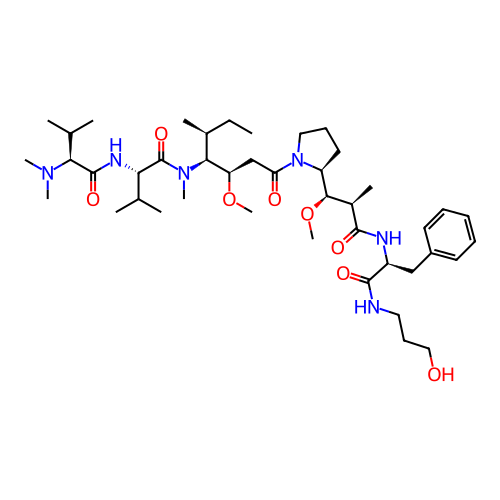
|
|||||
|
|
||||||
Each Antibody-drug Conjugate Related to This Payload
Full Information of The Activity Data of The ADC(s) Related to This Payload
Upifitamab rilsodotin [Phase 3 (discontinued)]
Identified from the Human Clinical Data
| Experiment 1 Reporting the Activity Date of This ADC | [1] | ||||
| Efficacy Data | Objective Response Rate (ORR) |
15.60%
|
|||
| Patients Enrolled |
The QTc sub-study mandates compliance with UPLIFT criteria plus additional ECG monitoring, excluding patients with uncontrolled arrhythmias, severe valvular disease, or concomitant CYP3A inducers. Specific ovarian cancer exclusions for UPLIFT include non-high-grade histologies, primary platinum-refractory disease, and prior participation in DES/EXP cohorts.
Click to Show/Hide
|
||||
| Administration Dosage |
UPLIFT enrolled patients with up to 4 prior lines of therapy; patients were dosed at 36mg/m2 Q4W.
|
||||
| Related Clinical Trial | |||||
| NCT Number | NCT03319628 | Phase Status | PHASE1|||PHASE2 | ||
| Clinical Description |
A Phase 1b/2, First-in-Human, Dose Escalation and Expansion Study of XMT-1536 In Patients With Solid Tumors Likely to Express NaPi2b
|
||||
| Primary Endpoint |
The primary objectives include determining the maximum tolerated dose (MTD) or recommended Phase 2 dose of XMT-1536 (upifitamab rilsodotin) based on safety assessments. Secondary objectives evaluate safety, pharmacokinetics (PK), anti-drug antibodies, and anti-tumor efficacy including objective response rate (ORR) by investigator and independent review, duration of response (DOR), and QTc interval effects via concentration-QTc analysis.
Click to Show/Hide
|
||||
| Other Endpoint |
Key inclusion criteria for DES, EXP, and UPLIFT cohorts involve ECOG 0-1, measurable disease per RECIST v1.1, adequate organ function, and resolution of prior toxicities (≤Grade 1). UPLIFT specifically requires high-grade platinum-resistant ovarian cancer (1-4 prior lines, archival tumor for NaPi2b testing). Exclusion criteria include untreated CNS metastases, active infections (HIV/HBV/HCV), significant cardiac/liver/pulmonary dysfunction, recent major surgery/systemic therapy, or prior treatment with antitubulin ADCs.
Click to Show/Hide
|
||||
| Experiment 2 Reporting the Activity Date of This ADC | [2] | ||||
| Patients Enrolled |
Exclusion criteria include prior treatment with mirvetuximab soravtansine or related ADCs, recent bevacizumab use, symptomatic GI obstruction, ascites/pleural effusion requiring drainage within 28 days, significant liver disease, pneumonitis/interstitial lung disease, or untreated CNS metastases/leptomeningeal involvement. Participants with clinically significant conditions per investigator judgment are also excluded.
Click to Show/Hide
|
||||
| Related Clinical Trial | |||||
| NCT Number | NCT05329545 | Phase Status | PHASE3 | ||
| Clinical Description |
A Phase 3, Randomized, Double-blind, Placebo-controlled, Multicenter Study of Upifitamab Rilsodotin (XMT-1536) as Post-Platinum Maintenance Therapy for Participants With Recurrent, Platinum-Sensitive, Ovarian Cancer (UP-NEXT)
|
||||
| Primary Endpoint |
The primary endpoint is progression-free survival (PFS) assessed by Blinded Independent Central Review (BICR) using RECIST v1.1, defined as time from randomization to disease progression or death. Secondary endpoints include overall survival (OS), PFS by investigator assessment, adverse events (AEs) per NCI CTCAE v5.0, ECOG performance status changes, objective response rate (ORR), and concomitant medication usage.
Click to Show/Hide
|
||||
| Other Endpoint |
Eligible participants must have histologically confirmed high-grade serous ovarian cancer (including fallopian tube/peritoneal) with platinum-sensitive recurrence, having received 4-8 cycles of prior platinum-based chemotherapy. Participants must provide tumor tissue for NaPi2b expression testing and meet specific BRCA mutation criteria if NED, CR, or PR was achieved without prior PARP inhibitor use.
Click to Show/Hide
|
||||
| Experiment 3 Reporting the Activity Date of This ADC | [3] | ||||
| Patients Enrolled |
General inclusion criteria require ECOG 0-1, measurable disease, resolved toxicities ≤Grade 1 (exceptions noted), LVEF ≥50%, adequate organ function (e.g., ANC ≥1500/mm3, platelets ≥100,000/mm3, GFR ≥45 mL/min), and no untreated CNS metastases. Key exclusions include recent major surgery, active infections (HIV/HBV/HCV), severe systemic disease, pneumonitis history, pregnancy, strong CYP3A modifiers use, or oxygen saturation <93%. Ovarian cancer-specific criteria mandate high-grade serous histology, platinum-resistant disease (1-4 prior lines, bevacizumab if 1-2 lines), and archival tumor availability. Exclusions cover low-grade/non-serous tumors, prior anti-tubulin ADCs, primary platinum resistance, and DES/EXP participation. The QTc sub-study requires adherence to UPLIFT criteria plus clinic stay for ECG assessments, excluding arrhythmias, severe valvular disease, or non-sinus rhythm (HR >45-<100).
Click to Show/Hide
|
||||
| Related Clinical Trial | |||||
| NCT Number | NCT06517433 | Phase Status | PHASE1 | ||
| Clinical Description |
A Phase 1b/2, First-in-Human, Dose Escalation and Expansion Study of XMT-1536 In Patients With Solid Tumors Likely to Express NaPi2b
|
||||
| Primary Endpoint |
The study evaluates the maximum tolerated dose or recommended Phase 2 dose of XMT-1536 (upifitamab rilsodotin) over 36 weeks, monitoring adverse events and concomitant medication use while assessing safety and tolerability from the first dose until 30 days post-study termination.
|
||||
| Other Endpoint |
The study evaluates the maximum tolerated dose or recommended Phase 2 dose of XMT-1536 (upifitamab rilsodotin) over 36 weeks, monitoring adverse events and concomitant medication use while assessing safety and tolerability from the first dose until 30 days post-study termination.
|
||||
| Experiment 4 Reporting the Activity Date of This ADC | [4] | ||||
| Patients Enrolled |
Key inclusion criteria require ECOG 0-1, measurable disease (RECIST v1.1), resolved prior toxicities (≤Grade 1, exceptions specified), LVEF ≥50%, adequate organ function (ANC ≥1500/mm 3, platelets ≥100K/mm 3, GFR ≥45 mL/min, bilirubin ≤ULN, AST/ALT ≤1.5x ULN, albumin ≥3.0 g/dL), and informed consent. Exclusion criteria include recent major surgery/anti-cancer therapy (<28 days or 5 half-lives), untreated CNS metastases, active HIV/HBV/HCV infections, severe systemic disease, oxygen therapy dependence, pneumonitis history, pregnancy, recent malignancy (exceptions allowed), active corneal disease, strong CYP3A modifiers, or O 2 saturation <93%. For ovarian cancer (UPLIFT), high-grade serous histology, platinum resistance (1-4 prior lines, bevacizumab if 1-2 lines), and tumor tissue availability are required; exclusions cover non-serous histologies, prior anti-tubulin ADCs, primary platinum resistance, and DES/EXP participation. The QTc sub-study mandates UPLIFT eligibility plus compliance with ECG monitoring (exclusions: strong CYP3A inducers, arrhythmias, severe valvular disease, HR >45-<100 bpm, non-sinus rhythm, or QT-interference ECG abnormalities).
Click to Show/Hide
|
||||
| Related Clinical Trial | |||||
| NCT Number | NCT06517485 | Phase Status | PHASE1 | ||
| Clinical Description |
A Phase 1b/2, First-in-Human, Dose Expansion Study of XMT-1536 In Patients With Solid Tumors Likely to Express NaPi2b
|
||||
| Primary Endpoint |
The study assesses safety and tolerability of the treatment, evaluating the incidence and severity of adverse events from the first dose until 30 days after study termination.
|
||||
| Experiment 5 Reporting the Activity Date of This ADC | [5] | ||||
| Patients Enrolled |
Safety monitoring will track adverse events per CTCAE v5.0, while pharmacokinetic analysis focuses on Cmax and AUC for both drugs. Antitumor activity assessments (ORR, DCR, PFS by RECIST 1.1, OS) occur every 8-12 weeks. Tumor NaPi2b expression and blood-based biomarkers will be analyzed for correlation with treatment response. The study excludes those with unresolved toxicity from prior therapies or contraindications to study drugs.
Click to Show/Hide
|
||||
| Administration Dosage |
XMT-1536 (Upifitamab Rilsodotin) will be administered on Day 1 of each 28-day cycle until disease progression, unacceptable toxicity, or either the patient or study physician determines it is in the best interest of the patient to discontinue participation in the study
|
||||
| Related Clinical Trial | |||||
| NCT Number | NCT04907968 | Phase Status | PHASE1 | ||
| Clinical Description |
Upifitamab Rilsodotin (Xmt-1536) An Open-Label, Multicenter, Dose Escalation And Expansion Study Of Upifitamab Rilsodotin In Combination With Carboplatin In Participants With High Grade Serous Ovarian Cancer (Upgrade-A)
|
||||
| Primary Endpoint |
The study aims to determine the MTD of Upifitamab Rilsodotin with carboplatin by evaluating adverse events over 24 weeks, while assessing the feasibility of this combination therapy (defined as ≥60% of participants completing ≥4 cycles without discontinuation for reasons other than progression). Safety, tolerability (CTCAE v5.0), and pharmacokinetics (Cmax, AUC) of both drugs will be monitored. Antitumor effects will be evaluated via ORR, DOR, DCR, PFS (RECIST 1.1), and OS.
Click to Show/Hide
|
||||
| Other Endpoint |
Inclusion criteria require female participants ≥18 years with platinum-sensitive recurrent high-grade serous ovarian cancer (1-3 prior lines, measurable disease, ECOG 0-1). Tumor sampling is mandated, and organ function must be adequate (LVEF ≥50%, ANC ≥1500/mm 3, platelets ≥100K/mm 3). Key exclusions include carboplatin hypersensitivity requiring discontinuation, prior ADC treatment with auristatin/maytansinoid payloads, untreated CNS metastases, recent major surgery/anticancer therapy, concurrent malignancies, and blood transfusion refusal.
Click to Show/Hide
|
||||
| Experiment 6 Reporting the Activity Date of This ADC | [6] | ||||
| Efficacy Data | Objective Response Rate (ORR) |
34.00
35.00 29.00 % |
High SLC34A2 expression (SLC34A2+++; 66,000 SLC34A2 antigens/cell) | ||
| Patients Enrolled |
Ovarian cancer patients with 1-3 prior lines in platinum-resistant; 4 prior lines patients regardless of platinum status.
|
||||
| Administration Dosage |
36 or 43 mg/m 2 IV once every 4 weeks.
|
||||
| Related Clinical Trial | |||||
| NCT Number | NCT03319628 | Phase Status | Phase 1/2 | ||
| Clinical Description |
Open-label, dose escalation to reach mtd. the mtd will be confirmed in parallel cohorts: patients with platinum-resistant ovarian cancer; patients with non-squamous nsclc, adenocarcinoma subtype.
|
||||
| Experiment 7 Reporting the Activity Date of This ADC | [7] | ||||
| Related Clinical Trial | |||||
| NCT Number | NCT05329545 | Phase Status | Phase 3 | ||
| Clinical Description |
A phase 3, randomized, double-blind, placebo-controlled, multicenter study of upifitamab rilsodotin (XMT-1536) as post-platinum maintenance therapy for participants with recurrent, platinum-sensitive, ovarian cancer (up-next).
|
||||
| Experiment 8 Reporting the Activity Date of This ADC | [8] | ||||
| Patients Enrolled |
Patients with a histological diagnosis of metastatic or recurrent high-grade serous ovarian cancer, including fallopian tube, or primary peritoneal cancer and have received 1-3 prior lines of therapy.
|
||||
| Related Clinical Trial | |||||
| NCT Number | NCT04907968 | Phase Status | Phase 1 | ||
| Clinical Description |
Upifitamab rilsodotin (XMT-1536) an open-label, multicenter, dose escalation and expansion study of upifitamab rilsodotin in combination with carboplatin in participants with high grade serous ovarian cancer (UP GRADE-A).
|
||||
Discovered Using Patient-derived Xenograft Model
| Experiment 1 Reporting the Activity Date of This ADC | [9] | ||||
| Efficacy Data | Tumor Growth Inhibition value (TGI) | ≈ 58.60% | Moderate SLC34A2 expression (SLC34A2++) | ||
| Method Description |
Animals were randomized into treatment groups (n = 10) when the tumor target volume reached 100-150 mm3. Test articles were administered intravenously via tail vein injection. Mice received a single dose of either saline vehicle; XMT-1535 at 3 mg/kg; XMT-1536 (DAR 12.4) at 3 mg/kg; IgG1-Dolaflexin (DAR 18.1) at 3 mg/kg,or lifastuzumab vedotin (DAR 4.1) at 3 mg/kg. Tumors were measured twice per week. XMT-1536 and lifastuzumab vedotin were administered at a single dose of 3 mg/kg qwk x 3.
Click to Show/Hide
|
||||
| In Vivo Model | Lung cancer PDX model (PDX: CTG-0178) | ||||
| Experiment 2 Reporting the Activity Date of This ADC | [9] | ||||
| Efficacy Data | Tumor Growth Inhibition value (TGI) | ≈ 60.60% | Moderate SLC34A2 expression (SLC34A2++) | ||
| Method Description |
Animals were randomized into treatment groups (n = 10) when the tumor target volume reached 100-150 mm3. Test articles were administered intravenously via tail vein injection. Mice received a single dose of either saline vehicle; XMT-1535 at 3 mg/kg; XMT-1536 (DAR 12.4) at 3 mg/kg; IgG1-Dolaflexin (DAR 18.1) at 3 mg/kg,or lifastuzumab vedotin (DAR 4.1) at 3 mg/kg. Tumors were measured twice per week. XMT-1536 and lifastuzumab vedotin were administered at a single dose of 3 mg/kg qwk x 3.
Click to Show/Hide
|
||||
| In Vivo Model | Lung cancer PDX model (PDX: CTG-0178) | ||||
| Experiment 3 Reporting the Activity Date of This ADC | [9] | ||||
| Efficacy Data | Tumor Growth Inhibition value (TGI) | ≈ 87.40% | Moderate SLC34A2 expression (SLC34A2++) | ||
| Method Description |
Animals were randomized into treatment groups (n = 10) when the tumor target volume reached 100-150 mm3. Test articles were administered intravenously via tail vein injection. Mice received a single dose of either saline vehicle; XMT-1535 at 3 mg/kg; XMT-1536 (DAR 12.4) at 3 mg/kg; IgG1-Dolaflexin (DAR 18.1) at 3 mg/kg,or lifastuzumab vedotin (DAR 4.1) at 3 mg/kg. Tumors were measured twice per week. XMT-1536 and lifastuzumab vedotin were administered at a single dose of 3 mg/kg qwk x 3.
Click to Show/Hide
|
||||
| In Vivo Model | Non-small cell lung cancer PDX model (PDX: CTG-0860) | ||||
| Experiment 4 Reporting the Activity Date of This ADC | [9] | ||||
| Efficacy Data | Tumor Growth Inhibition value (TGI) | ≈ 94.10% | High SLC34A2 expression (SLC34A2+++) | ||
| Method Description |
Animals were randomized into treatment groups (n = 10) when the tumor target volume reached 100-150 mm3. Test articles were administered intravenously via tail vein injection. Mice received a single dose of either saline vehicle; XMT-1535 at 3 mg/kg; XMT-1536 (DAR 12.4) at 3 mg/kg; IgG1-Dolaflexin (DAR 18.1) at 3 mg/kg,or lifastuzumab vedotin (DAR 4.1) at 3 mg/kg. Tumors were measured twice per week. XMT-1536 and lifastuzumab vedotin were administered at a single dose of 3 mg/kg qwk x 3.
Click to Show/Hide
|
||||
| In Vivo Model | Lung cancer PDX model (PDX: CTG-0852) | ||||
| Experiment 5 Reporting the Activity Date of This ADC | [9] | ||||
| Efficacy Data | Tumor Growth Inhibition value (TGI) | ≈ 95.40% | High SLC34A2 expression (SLC34A2+++) | ||
| Method Description |
Animals were randomized into treatment groups (n = 10) when the tumor target volume reached 100-150 mm3. Test articles were administered intravenously via tail vein injection. Mice received a single dose of either saline vehicle; XMT-1535 at 3 mg/kg; XMT-1536 (DAR 12.4) at 3 mg/kg; IgG1-Dolaflexin (DAR 18.1) at 3 mg/kg,or lifastuzumab vedotin (DAR 4.1) at 3 mg/kg. Tumors were measured twice per week. XMT-1536 and lifastuzumab vedotin were administered at a single dose of 3 mg/kg qwk x 3.
Click to Show/Hide
|
||||
| In Vivo Model | Lung cancer PDX model (PDX: CTG-0852) | ||||
| Experiment 6 Reporting the Activity Date of This ADC | [9] | ||||
| Efficacy Data | Tumor Growth Inhibition value (TGI) | ≈ 96.70% | High SLC34A2 expression (SLC34A2+++) | ||
| Method Description |
Animals were randomized into treatment groups (n = 10) when the tumor target volume reached 100-150 mm3. Test articles were administered intravenously via tail vein injection. Mice received a single dose of either saline vehicle; XMT-1535 at 3 mg/kg; XMT-1536 (DAR 12.4) at 3 mg/kg; IgG1-Dolaflexin (DAR 18.1) at 3 mg/kg,or lifastuzumab vedotin (DAR 4.1) at 3 mg/kg. Tumors were measured twice per week. XMT-1536 and lifastuzumab vedotin were administered at a single dose of 3 mg/kg qwk x 3.
Click to Show/Hide
|
||||
| In Vivo Model | Lung cancer PDX model (PDX: CTG-0852) | ||||
Discovered Using Cell Line-derived Xenograft Model
| Experiment 1 Reporting the Activity Date of This ADC | [9] | ||||
| Efficacy Data | Tumor Growth Inhibition value (TGI) | ≈ 94% | High SLC34A2 expression (SLC34A2+++) | ||
| Method Description |
Animals were randomized into treatment groups (n = 10) when the tumor target volume reached 100-150 mm3. Test articles were administered intravenously via tail vein injection. Mice received a single dose of either saline vehicle; XMT-1535 at 3 mg/kg; XMT-1536 (DAR 12.4) at 3 mg/kg; IgG1-Dolaflexin (DAR 18.1) at 3 mg/kg,or lifastuzumab vedotin (DAR 4.1) at 3 mg/kg. Tumors were measured twice per week. XMT-1536 and lifastuzumab vedotin were administered at a single dose of 3 mg/kg.
Click to Show/Hide
|
||||
| In Vivo Model | Ovarian adenocarcinoma CDX model | ||||
| In Vitro Model | Ovarian serous adenocarcinoma | OVCAR-3 cells | CVCL_0465 | ||
Revealed Based on the Cell Line Data
| Experiment 1 Reporting the Activity Date of This ADC | [9] | ||||
| Efficacy Data | Half Maximal Effective Concentration (EC50) |
0.52 nM
|
|||
| Method Description |
OVCAR3 cells were grown in RPMI1640 media supplemented with 20% FBS and 1% penicillin/streptomycin,seeded at a density of 5, 000 cells per well in 100 L of growth media in a 96-well,white flat-bottom plate. Following overnight incubation,the media was replaced with 100 L of fresh media containing the test compounds at a 3-fold titration up to 33 nmol/L. The treated cells were incubated for 96 hours at 37°C in the presence of 5% CO2. In the OVCAR3 cell line,XMT-1536 was cytotoxic in a 96-hour cellular cytotoxicity assay.
Click to Show/Hide
|
||||
| In Vitro Model | Ovarian serous adenocarcinoma | OVCAR-3 cells | CVCL_0465 | ||
Emiltatug ledadotin [Phase 1]
Identified from the Human Clinical Data
| Experiment 1 Reporting the Activity Date of This ADC | [10] | ||||
| Patients Enrolled |
Eligible patients (ECOG 0-1) have recurrent/advanced solid tumors (measurable per RECIST 1.1) and available tumor tissue. Key exclusions: prior auristatin-ADC treatment, untreated CNS metastases, active liver disease (cirrhosis/varices), uncontrolled systemic illness, or recent anticancer therapy/surgery (within specified washout periods). Brain MRI is required for TNBC or symptomatic/metastatic CNS history.
Click to Show/Hide
|
||||
| Administration Dosage |
XMT-1660 will be administered through a vein in your arm or port catheter (intravenously)
|
||||
| Related Clinical Trial | |||||
| NCT Number | NCT05377996 | Phase Status | PHASE1 | ||
| Clinical Description |
A Phase 1, First-in-human, Dose Escalation and Expansion, Multicenter Study of XMT-1660 in Participants With Solid Tumors
|
||||
| Primary Endpoint |
The Phase 1 study evaluates DLTs within the first treatment cycle (17 months) to establish MTD/RP2D for XMT-1660, with safety/tolerability assessed via AEs over 3 years. Phase 2 expansion measures ORR per RECIST 1.1 (investigator-assessed CR/PR rates).
|
||||
| Other Endpoint |
Secondary endpoints include ORR (dose escalation), DOR (time to progression/death), and comprehensive PK analysis (Tmax, Cmax, AUC, clearance, half-life, volume of distribution, Ctrough) over 3 years. Immunogenicity (ADA/nAb development) is monitored throughout both phases.
|
||||
ASN004 [Phase 1 (discontinued)]
Identified from the Human Clinical Data
| Experiment 1 Reporting the Activity Date of This ADC | [11] | ||||
| Patients Enrolled |
Eligible patients must have histologically confirmed advanced solid tumors (dose expansion limited to 5T4-expressing cancers like colorectal, breast, and ovarian) with progression after standard therapy or no standard options. Key exclusions include untreated brain metastases (>1 cm or symptomatic), LVEF <50%, and hematologic malignancies. All patients require measurable disease (exceptions per Medical Monitor), ECOG 0-1, adequate organ function, and compliance with contraception (3 months post-treatment). Archival/fresh tumor tissue (mandatory for 5T4 confirmation in some cohorts) must be provided.
Click to Show/Hide
|
||||
| Administration Dosage |
Patients will receive escalating doses of ASN004 to identify the best dose for further study.
|
||||
| Related Clinical Trial | |||||
| NCT Number | NCT04410224 | Phase Status | PHASE1 | ||
| Clinical Description |
An Open Label, Multicenter, Dose-Finding Clinical Phase 1 Study of ASN004 to Evaluate Safety, Tolerability, Pharmacokinetics, Pharmacodynamics and Preliminary Efficacy in Patients With Advanced Malignant Solid Tumors
|
||||
| Primary Endpoint |
The study will determine the Maximum Tolerated Dose (MTD) of ASN004 by assessing treatment-related adverse events (AEs) and dose-limiting toxicities (DLTs) within the first 21 days (for Q3W dosing) or 28 days (for Q4W dosing) of treatment. The MTD will define the highest dose with acceptable safety for future studies.
|
||||
| Other Endpoint |
Pharmacokinetic (PK) parameters will be evaluated over the first 63 days, including plasma concentration (AUC), maximum steady-state concentration (Cmax), and terminal elimination rate. Tumor response will be tracked for one year using RECIST v1.1 criteria, measuring changes in lesion size, resolution of non-measurable lesions, and appearance of new lesions.
Click to Show/Hide
|
||||
Discovered Using Cell Line-derived Xenograft Model
| Experiment 1 Reporting the Activity Date of This ADC | [12] | ||||
| Efficacy Data | Tumor Growth Inhibition value (TGI) | ≈ 28.20% | Low 5T4 expression (5T4+) | ||
| Method Description |
ASN004 was evaluated for efficacy in human tumor mouse xenograft models,derived from four different human tumor cell types,having a wide range of 5T4 expression levels. ASN004 was studied in a tumor xenograft model derived from the A431 (human cervical epidermoid,5T4+; 88, 000 binding sites per cell) tumor cell line. Subcutaneous tumor xenografts were developed in nude mice with established mean tumor volumes of 150 mm3. The dose of ASN004 was 0.3 mg/kg single dose.
Click to Show/Hide
|
||||
| In Vivo Model | Cervical cancer CDX model | ||||
| In Vitro Model | Skin squamous cell carcinoma | A431 cells | CVCL_0037 | ||
| Experiment 2 Reporting the Activity Date of This ADC | [12] | ||||
| Efficacy Data | Tumor Growth Inhibition value (TGI) | ≈ 54.30% | Low 5T4 expression (5T4+) | ||
| Method Description |
ASN004 was evaluated for efficacy in human tumor mouse xenograft models,derived from four different human tumor cell types,having a wide range of 5T4 expression levels. ASN004 was further evaluated in a tumor xenograft model derived from the H1975 human lung carcinoma cell line [5T4+; 15, 800 binding sites per cell]. Subcutaneous tumor xenografts were developed in nude mice with established mean tumor volumes of 150 mm3. The dose of ASN004 was 0.3 mg/kg Q4D 4.
Click to Show/Hide
|
||||
| In Vivo Model | Lung cancer CDX model | ||||
| In Vitro Model | Lung cancer | Lung cancer cells | Homo sapiens | ||
| Experiment 3 Reporting the Activity Date of This ADC | [12] | ||||
| Efficacy Data | Tumor Growth Inhibition value (TGI) | ≈ 55.50% | Low 5T4 expression (5T4+) | ||
| Method Description |
ASN004 was evaluated for efficacy in human tumor mouse xenograft models,derived from four different human tumor cell types,having a wide range of 5T4 expression levels. Subcutaneous tumor xenografts were developed in nude mice with established mean tumor volumes of 150 mm3. The dose of ASN004 was 1 mg/kg Q4D 4.
|
||||
| In Vivo Model | Cervical advanced-stage cancer CDX model | ||||
| In Vitro Model | Cervical advanced-stage cancer | Cervical advanced-stage cancer cells | Homo sapiens | ||
| Experiment 4 Reporting the Activity Date of This ADC | [12] | ||||
| Efficacy Data | Tumor Growth Inhibition value (TGI) | ≈ 94.20% | Low 5T4 expression (5T4+) | ||
| Method Description |
ASN004 was evaluated for efficacy in human tumor mouse xenograft models,derived from four different human tumor cell types,having a wide range of 5T4 expression levels. ASN004 was studied in a tumor xenograft model derived from the A431 (human cervical epidermoid,5T4+; 88, 000 binding sites per cell) tumor cell line. Subcutaneous tumor xenografts were developed in nude mice with established mean tumor volumes of 150 mm3. The dose of ASN004 was 1 mg/kg single dose.
Click to Show/Hide
|
||||
| In Vivo Model | Cervical cancer CDX model | ||||
| In Vitro Model | Skin squamous cell carcinoma | A431 cells | CVCL_0037 | ||
| Experiment 5 Reporting the Activity Date of This ADC | [12] | ||||
| Efficacy Data | Tumor Growth Inhibition value (TGI) | ≈ 96.30% | Low 5T4 expression (5T4+) | ||
| Method Description |
ASN004 was evaluated for efficacy in human tumor mouse xenograft models,derived from four different human tumor cell types,having a wide range of 5T4 expression levels. ASN004 was studied in a tumor xenograft model derived from the A431 (human cervical epidermoid,5T4+; 88, 000 binding sites per cell) tumor cell line. Subcutaneous tumor xenografts were developed in nude mice with established mean tumor volumes of 150 mm3. The dose of ASN004 was 3 mg/kg single dose.
Click to Show/Hide
|
||||
| In Vivo Model | Cervical cancer CDX model | ||||
| In Vitro Model | Skin squamous cell carcinoma | A431 cells | CVCL_0037 | ||
| Experiment 6 Reporting the Activity Date of This ADC | [12] | ||||
| Efficacy Data | Tumor Growth Inhibition value (TGI) | ≈ 100% | Low 5T4 expression (5T4+) | ||
| Method Description |
ASN004 was evaluated for efficacy in human tumor mouse xenograft models,derived from four different human tumor cell types,having a wide range of 5T4 expression levels. ASN004 was further evaluated in a tumor xenograft model derived from the H1975 human lung carcinoma cell line [5T4+; 15, 800 binding sites per cell]. Subcutaneous tumor xenografts were developed in nude mice with established mean tumor volumes of 150 mm3. The dose of ASN004 was 3 mg/kg Q4D 4.
Click to Show/Hide
|
||||
| In Vivo Model | Lung cancer CDX model | ||||
| In Vitro Model | Lung cancer | Lung cancer cells | Homo sapiens | ||
| Experiment 7 Reporting the Activity Date of This ADC | [12] | ||||
| Efficacy Data | Tumor Growth Inhibition value (TGI) | ≈ 100% | Low 5T4 expression (5T4+) | ||
| Method Description |
ASN004 was evaluated for efficacy in human tumor mouse xenograft models,derived from four different human tumor cell types,having a wide range of 5T4 expression levels. ASN004 was further evaluated in a tumor xenograft model derived from the H1975 human lung carcinoma cell line [5T4+; 15, 800 binding sites per cell]. Subcutaneous tumor xenografts were developed in nude mice with established mean tumor volumes of 150 mm3. The dose of ASN004 was 1 mg/kg Q4D 4.
Click to Show/Hide
|
||||
| In Vivo Model | Lung cancer CDX model | ||||
| In Vitro Model | Lung cancer | Lung cancer cells | Homo sapiens | ||
| Experiment 8 Reporting the Activity Date of This ADC | [12] | ||||
| Efficacy Data | Tumor Growth Inhibition value (TGI) | ≈ 100% | Negative 5T4 expression (5T4-) | ||
| Method Description |
ASN004 was evaluated for efficacy in human tumor mouse xenograft models,derived from four different human tumor cell types,having a wide range of 5T4 expression levels. A tumor xenograft model derived from the NCI-N87 human gastric tumor cell line [5T4-; 4, 400 binding sites per cell] and high expression of HER2. Subcutaneous tumor xenografts were developed in nude mice with established mean tumor volumes of 150 mm3. The dose of ASN004 was 3 mg/kg Q4D 3.
Click to Show/Hide
|
||||
| In Vivo Model | Gastric cancer CDX model | ||||
| In Vitro Model | Gastric cancer | Gastric cancer cells | Homo sapiens | ||
| Experiment 9 Reporting the Activity Date of This ADC | [12] | ||||
| Efficacy Data | Tumor Growth Inhibition value (TGI) | ≈ 100% | Negative 5T4 expression (5T4-) | ||
| Method Description |
ASN004 was evaluated for efficacy in human tumor mouse xenograft models,derived from four different human tumor cell types,having a wide range of 5T4 expression levels. A tumor xenograft model derived from the NCI-N87 human gastric tumor cell line [5T4-; 4, 400 binding sites per cell] and high expression of HER2. Subcutaneous tumor xenografts were developed in nude mice with established mean tumor volumes of 150 mm3. The dose of ASN004 was 3 mg/kg single dose.
Click to Show/Hide
|
||||
| In Vivo Model | Gastric cancer CDX model | ||||
| In Vitro Model | Gastric cancer | Gastric cancer cells | Homo sapiens | ||
| Experiment 10 Reporting the Activity Date of This ADC | [12] | ||||
| Efficacy Data | Tumor Growth Inhibition value (TGI) | ≈ 100% | High 5T4 expression (5T4+++) | ||
| Method Description |
ASN004 was evaluated for efficacy in human tumor mouse xenograft models,derived from four different human tumor cell types,having a wide range of 5T4 expression levels. ubcutaneous tumor xenografts were developed in nude mice with established mean tumor volumes of 150 mm3. The dose of ASN004 was 10 mg/kg single dose.
|
||||
| In Vivo Model | Breast cancer CDX model | ||||
| In Vitro Model | Breast adenocarcinoma | MDA-MB-231 cells (5T4 overexpression) | CVCL_0062 | ||
| Experiment 11 Reporting the Activity Date of This ADC | [12] | ||||
| Efficacy Data | Tumor Growth Inhibition value (TGI) | ≈ 100% | High 5T4 expression (5T4+++) | ||
| Method Description |
ASN004 was evaluated for efficacy in human tumor mouse xenograft models,derived from four different human tumor cell types,having a wide range of 5T4 expression levels. Subcutaneous tumor xenografts were developed in nude mice with established mean tumor volumes of 150 mm3. The dose of ASN004 was 6mg/kg Q4D 4.
|
||||
| In Vivo Model | Breast cancer CDX model | ||||
| In Vitro Model | Breast adenocarcinoma | MDA-MB-231 cells (5T4 overexpression) | CVCL_0062 | ||
| Experiment 12 Reporting the Activity Date of This ADC | [12] | ||||
| Efficacy Data | Tumor Growth Inhibition value (TGI) | ≈ 100% | High 5T4 expression (5T4+++) | ||
| Method Description |
ASN004 was evaluated for efficacy in human tumor mouse xenograft models,derived from four different human tumor cell types,having a wide range of 5T4 expression levels. Subcutaneous tumor xenografts were developed in nude mice with established mean tumor volumes of 150 mm3. The dose of ASN004 was 3 mg/kg Q4D 4.
|
||||
| In Vivo Model | Breast cancer CDX model | ||||
| In Vitro Model | Breast adenocarcinoma | MDA-MB-231 cells (5T4 overexpression) | CVCL_0062 | ||
| Experiment 13 Reporting the Activity Date of This ADC | [12] | ||||
| Efficacy Data | Tumor Growth Inhibition value (TGI) | ≈ 100% | High 5T4 expression (5T4+++) | ||
| Method Description |
ASN004 was evaluated for efficacy in human tumor mouse xenograft models,derived from four different human tumor cell types,having a wide range of 5T4 expression levels. Subcutaneous tumor xenografts were developed in nude mice with established mean tumor volumes of 150 mm3. The dose of ASN004 was 1 mg/kg Q4D 4.
|
||||
| In Vivo Model | Breast cancer CDX model | ||||
| In Vitro Model | Breast adenocarcinoma | MDA-MB-231 cells (5T4 overexpression) | CVCL_0062 | ||
| Experiment 14 Reporting the Activity Date of This ADC | [12] | ||||
| Efficacy Data | Tumor Growth Inhibition value (TGI) | ≈ 100% | Low 5T4 expression (5T4+) | ||
| Method Description |
ASN004 was evaluated for efficacy in human tumor mouse xenograft models,derived from four different human tumor cell types,having a wide range of 5T4 expression levels. ASN004 was studied in a tumor xenograft model derived from the A431 (human cervical epidermoid,5T4+; 88, 000 binding sites per cell) tumor cell line. Subcutaneous tumor xenografts were developed in nude mice with established mean tumor volumes of 150 mm3. The dose of ASN004 was 10 mg/kg single dose.
Click to Show/Hide
|
||||
| In Vivo Model | Cervical cancer CDX model | ||||
| In Vitro Model | Skin squamous cell carcinoma | A431 cells | CVCL_0037 | ||
| Experiment 15 Reporting the Activity Date of This ADC | [12] | ||||
| Efficacy Data | Tumor Growth Inhibition value (TGI) | ≈ 100% | Low 5T4 expression (5T4+) | ||
| Method Description |
ASN004 was evaluated for efficacy in human tumor mouse xenograft models,derived from four different human tumor cell types,having a wide range of 5T4 expression levels. ASN004 was studied in a tumor xenograft model derived from the A431 (human cervical epidermoid,5T4+; 88, 000 binding sites per cell) tumor cell line. Subcutaneous tumor xenografts were developed in nude mice with established mean tumor volumes of 150 mm3. The dose of ASN004 was 6mg/kg Q4D 4.
Click to Show/Hide
|
||||
| In Vivo Model | Cervical cancer CDX model | ||||
| In Vitro Model | Skin squamous cell carcinoma | A431 cells | CVCL_0037 | ||
| Experiment 16 Reporting the Activity Date of This ADC | [12] | ||||
| Efficacy Data | Tumor Growth Inhibition value (TGI) | ≈ 100% | Low 5T4 expression (5T4+) | ||
| Method Description |
ASN004 was evaluated for efficacy in human tumor mouse xenograft models,derived from four different human tumor cell types,having a wide range of 5T4 expression levels. ASN004 was studied in a tumor xenograft model derived from the A431 (human cervical epidermoid,5T4+; 88, 000 binding sites per cell) tumor cell line. Subcutaneous tumor xenografts were developed in nude mice with established mean tumor volumes of 150 mm3. The dose of ASN004 was 3 mg/kg Q4D 4.
Click to Show/Hide
|
||||
| In Vivo Model | Cervical cancer CDX model | ||||
| In Vitro Model | Skin squamous cell carcinoma | A431 cells | CVCL_0037 | ||
| Experiment 17 Reporting the Activity Date of This ADC | [12] | ||||
| Efficacy Data | Tumor Growth Inhibition value (TGI) | ≈ 100% | Low 5T4 expression (5T4+) | ||
| Method Description |
ASN004 was evaluated for efficacy in human tumor mouse xenograft models,derived from four different human tumor cell types,having a wide range of 5T4 expression levels. ASN004 was studied in a tumor xenograft model derived from the A431 (human cervical epidermoid,5T4+; 88, 000 binding sites per cell) tumor cell line. Subcutaneous tumor xenografts were developed in nude mice with established mean tumor volumes of 150 mm3. The dose of ASN004 was 1 mg/kg Q4D 4.
Click to Show/Hide
|
||||
| In Vivo Model | Cervical cancer CDX model | ||||
| In Vitro Model | Skin squamous cell carcinoma | A431 cells | CVCL_0037 | ||
Revealed Based on the Cell Line Data
| Experiment 1 Reporting the Activity Date of This ADC | [12] | ||||
| Efficacy Data | Half Maximal Inhibitory Concentration (IC50) |
0.07 nM
|
Low 5T4 expression (5T4+) | ||
| Method Description |
The cytotoxic effect of ASN004 was assessed in cell viability assays for a diverse panel of human solid tumor cell lines representing bladder,breast,cervical,colon,gastric,glioblastoma,liver,lung,melanoma,placenta,and prostate cancers.
|
||||
| In Vitro Model | Breast adenocarcinoma | SK-BR-3 cells | CVCL_0033 | ||
| Experiment 2 Reporting the Activity Date of This ADC | [12] | ||||
| Efficacy Data | Half Maximal Inhibitory Concentration (IC50) |
0.09 nM
|
High 5T4 expression (5T4+++) | ||
| Method Description |
The cytotoxic effect of ASN004 was assessed in cell viability assays for a diverse panel of human solid tumor cell lines representing bladder,breast,cervical,colon,gastric,glioblastoma,liver,lung,melanoma,placenta,and prostate cancers.
|
||||
| In Vitro Model | Bladder squamous cell carcinoma | SCaBER cells | CVCL_3599 | ||
| Experiment 3 Reporting the Activity Date of This ADC | [12] | ||||
| Efficacy Data | Half Maximal Inhibitory Concentration (IC50) |
0.09 nM
|
Low 5T4 expression (5T4+) | ||
| Method Description |
The cytotoxic effect of ASN004 was assessed in cell viability assays for a diverse panel of human solid tumor cell lines representing bladder,breast,cervical,colon,gastric,glioblastoma,liver,lung,melanoma,placenta,and prostate cancers.
|
||||
| In Vitro Model | Breast adenocarcinoma | MDA-MB-231 cells | CVCL_0062 | ||
| Experiment 4 Reporting the Activity Date of This ADC | [12] | ||||
| Efficacy Data | Half Maximal Inhibitory Concentration (IC50) |
0.12 nM
|
High 5T4 expression (5T4+++) | ||
| Method Description |
The cytotoxic effect of ASN004 was assessed in cell viability assays for a diverse panel of human solid tumor cell lines representing bladder,breast,cervical,colon,gastric,glioblastoma,liver,lung,melanoma,placenta,and prostate cancers.
|
||||
| In Vitro Model | Amelanotic melanoma | A-375 cells | CVCL_0132 | ||
| Experiment 5 Reporting the Activity Date of This ADC | [12] | ||||
| Efficacy Data | Half Maximal Inhibitory Concentration (IC50) |
0.12 nM
|
Moderate 5T4 expression (5T4++) | ||
| Method Description |
The cytotoxic effect of ASN004 was assessed in cell viability assays for a diverse panel of human solid tumor cell lines representing bladder,breast,cervical,colon,gastric,glioblastoma,liver,lung,melanoma,placenta,and prostate cancers.
|
||||
| In Vitro Model | Bladder carcinoma | 5637 cells | CVCL_0126 | ||
| Experiment 6 Reporting the Activity Date of This ADC | [12] | ||||
| Efficacy Data | Half Maximal Inhibitory Concentration (IC50) |
0.15 nM
|
Low 5T4 expression (5T4+) | ||
| Method Description |
The cytotoxic effect of ASN004 was assessed in cell viability assays for a diverse panel of human solid tumor cell lines representing bladder,breast,cervical,colon,gastric,glioblastoma,liver,lung,melanoma,placenta,and prostate cancers.
|
||||
| In Vitro Model | Invasive breast carcinoma | MCF-7 cells | CVCL_0031 | ||
| Experiment 7 Reporting the Activity Date of This ADC | [12] | ||||
| Efficacy Data | Half Maximal Inhibitory Concentration (IC50) |
0.17 nM
|
Low 5T4 expression (5T4+) | ||
| Method Description |
The cytotoxic effect of ASN004 was assessed in cell viability assays for a diverse panel of human solid tumor cell lines representing bladder,breast,cervical,colon,gastric,glioblastoma,liver,lung,melanoma,placenta,and prostate cancers.
|
||||
| In Vitro Model | Prostate carcinoma | DU145 cells | CVCL_0105 | ||
| Experiment 8 Reporting the Activity Date of This ADC | [12] | ||||
| Efficacy Data | Half Maximal Inhibitory Concentration (IC50) |
0.18 nM
|
Low 5T4 expression (5T4+) | ||
| Method Description |
The cytotoxic effect of ASN004 was assessed in cell viability assays for a diverse panel of human solid tumor cell lines representing bladder,breast,cervical,colon,gastric,glioblastoma,liver,lung,melanoma,placenta,and prostate cancers.
|
||||
| In Vitro Model | Endocervical adenocarcinoma | HeLa cells | CVCL_0030 | ||
| Experiment 9 Reporting the Activity Date of This ADC | [12] | ||||
| Efficacy Data | Half Maximal Inhibitory Concentration (IC50) |
0.23 nM
|
Low 5T4 expression (5T4+) | ||
| Method Description |
The cytotoxic effect of ASN004 was assessed in cell viability assays for a diverse panel of human solid tumor cell lines representing bladder,breast,cervical,colon,gastric,glioblastoma,liver,lung,melanoma,placenta,and prostate cancers.
|
||||
| In Vitro Model | Breast adenocarcinoma | MDA-MB-231 cells | CVCL_0062 | ||
| Experiment 10 Reporting the Activity Date of This ADC | [12] | ||||
| Efficacy Data | Half Maximal Inhibitory Concentration (IC50) |
0.25 nM
|
Low 5T4 expression (5T4+) | ||
| Method Description |
The cytotoxic effect of ASN004 was assessed in cell viability assays for a diverse panel of human solid tumor cell lines representing bladder,breast,cervical,colon,gastric,glioblastoma,liver,lung,melanoma,placenta,and prostate cancers.
|
||||
| In Vitro Model | Lung adenocarcinoma | A-549 cells | CVCL_0023 | ||
| Experiment 11 Reporting the Activity Date of This ADC | [12] | ||||
| Efficacy Data | Half Maximal Inhibitory Concentration (IC50) |
0.26 nM
|
Low 5T4 expression (5T4+) | ||
| Method Description |
The cytotoxic effect of ASN004 was assessed in cell viability assays for a diverse panel of human solid tumor cell lines representing bladder,breast,cervical,colon,gastric,glioblastoma,liver,lung,melanoma,placenta,and prostate cancers.
|
||||
| In Vitro Model | Skin squamous cell carcinoma | A431 cells | CVCL_0037 | ||
| Experiment 12 Reporting the Activity Date of This ADC | [12] | ||||
| Efficacy Data | Half Maximal Inhibitory Concentration (IC50) |
0.31 nM
|
Low 5T4 expression (5T4+) | ||
| Method Description |
The cytotoxic effect of ASN004 was assessed in cell viability assays for a diverse panel of human solid tumor cell lines representing bladder,breast,cervical,colon,gastric,glioblastoma,liver,lung,melanoma,placenta,and prostate cancers.
|
||||
| In Vitro Model | Bladder carcinoma | SW780 cells | CVCL_1728 | ||
| Experiment 13 Reporting the Activity Date of This ADC | [12] | ||||
| Efficacy Data | Half Maximal Inhibitory Concentration (IC50) |
0.34 nM
|
Low 5T4 expression (5T4+) | ||
| Method Description |
The cytotoxic effect of ASN004 was assessed in cell viability assays for a diverse panel of human solid tumor cell lines representing bladder,breast,cervical,colon,gastric,glioblastoma,liver,lung,melanoma,placenta,and prostate cancers.
|
||||
| In Vitro Model | Glioblastoma | U-87MG cells | CVCL_0022 | ||
| Experiment 14 Reporting the Activity Date of This ADC | [12] | ||||
| Efficacy Data | Half Maximal Inhibitory Concentration (IC50) |
0.42 nM
|
High 5T4 expression (5T4+++) | ||
| Method Description |
The cytotoxic effect of ASN004 was assessed in cell viability assays for a diverse panel of human solid tumor cell lines representing bladder,breast,cervical,colon,gastric,glioblastoma,liver,lung,melanoma,placenta,and prostate cancers.
|
||||
| In Vitro Model | Breast adenocarcinoma | MDA-MB-231 cells (5T4 overexpression) | CVCL_0062 | ||
| Experiment 15 Reporting the Activity Date of This ADC | [12] | ||||
| Efficacy Data | Half Maximal Inhibitory Concentration (IC50) |
0.42 nM
|
Low 5T4 expression (5T4+) | ||
| Method Description |
The cytotoxic effect of ASN004 was assessed in cell viability assays for a diverse panel of human solid tumor cell lines representing bladder,breast,cervical,colon,gastric,glioblastoma,liver,lung,melanoma,placenta,and prostate cancers.
|
||||
| In Vitro Model | Prostate carcinoma | PC-3 cells | CVCL_0035 | ||
| Experiment 16 Reporting the Activity Date of This ADC | [12] | ||||
| Efficacy Data | Half Maximal Inhibitory Concentration (IC50) |
0.44 nM
|
Low 5T4 expression (5T4+) | ||
| Method Description |
The cytotoxic effect of ASN004 was assessed in cell viability assays for a diverse panel of human solid tumor cell lines representing bladder,breast,cervical,colon,gastric,glioblastoma,liver,lung,melanoma,placenta,and prostate cancers.
|
||||
| In Vitro Model | Gestational choriocarcinoma | JEG-3 cells | CVCL_0363 | ||
| Experiment 17 Reporting the Activity Date of This ADC | [12] | ||||
| Efficacy Data | Half Maximal Inhibitory Concentration (IC50) |
0.56 nM
|
Moderate 5T4 expression (5T4++) | ||
| Method Description |
The cytotoxic effect of ASN004 was assessed in cell viability assays for a diverse panel of human solid tumor cell lines representing bladder,breast,cervical,colon,gastric,glioblastoma,liver,lung,melanoma,placenta,and prostate cancers.
|
||||
| In Vitro Model | Breast adenocarcinoma | MDA-MB-468 cells | CVCL_0419 | ||
| Experiment 18 Reporting the Activity Date of This ADC | [12] | ||||
| Efficacy Data | Half Maximal Inhibitory Concentration (IC50) |
0.57 nM
|
Negative 5T4 expression (5T4-) | ||
| Method Description |
The cytotoxic effect of ASN004 was assessed in cell viability assays for a diverse panel of human solid tumor cell lines representing bladder,breast,cervical,colon,gastric,glioblastoma,liver,lung,melanoma,placenta,and prostate cancers.
|
||||
| In Vitro Model | Colon cancer | HT29 cells | CVCL_A8EZ | ||
| Experiment 19 Reporting the Activity Date of This ADC | [12] | ||||
| Efficacy Data | Half Maximal Inhibitory Concentration (IC50) |
0.62 nM
|
Negative 5T4 expression (5T4-) | ||
| Method Description |
The cytotoxic effect of ASN004 was assessed in cell viability assays for a diverse panel of human solid tumor cell lines representing bladder,breast,cervical,colon,gastric,glioblastoma,liver,lung,melanoma,placenta,and prostate cancers.
|
||||
| In Vitro Model | Gastric tubular adenocarcinoma | NCI-N87 cells | CVCL_1603 | ||
| Experiment 20 Reporting the Activity Date of This ADC | [12] | ||||
| Efficacy Data | Half Maximal Inhibitory Concentration (IC50) |
0.66 nM
|
Moderate 5T4 expression (5T4++) | ||
| Method Description |
The cytotoxic effect of ASN004 was assessed in cell viability assays for a diverse panel of human solid tumor cell lines representing bladder,breast,cervical,colon,gastric,glioblastoma,liver,lung,melanoma,placenta,and prostate cancers.
|
||||
| In Vitro Model | Bladder carcinoma | TCCSUP cells | CVCL_1738 | ||
| Experiment 21 Reporting the Activity Date of This ADC | [12] | ||||
| Efficacy Data | Half Maximal Inhibitory Concentration (IC50) |
0.76 nM
|
Moderate 5T4 expression (5T4++) | ||
| Method Description |
The cytotoxic effect of ASN004 was assessed in cell viability assays for a diverse panel of human solid tumor cell lines representing bladder,breast,cervical,colon,gastric,glioblastoma,liver,lung,melanoma,placenta,and prostate cancers.
|
||||
| In Vitro Model | Recurrent bladder carcinoma | HT-1197 cells | CVCL_1291 | ||
| Experiment 22 Reporting the Activity Date of This ADC | [12] | ||||
| Efficacy Data | Half Maximal Inhibitory Concentration (IC50) |
0.78 nM
|
Negative 5T4 expression (5T4-) | ||
| Method Description |
The cytotoxic effect of ASN004 was assessed in cell viability assays for a diverse panel of human solid tumor cell lines representing bladder,breast,cervical,colon,gastric,glioblastoma,liver,lung,melanoma,placenta,and prostate cancers.
|
||||
| In Vitro Model | Bladder carcinoma | RT-4 cells | CVCL_0036 | ||
| Experiment 23 Reporting the Activity Date of This ADC | [12] | ||||
| Efficacy Data | Half Maximal Inhibitory Concentration (IC50) |
0.93 nM
|
Low 5T4 expression (5T4+) | ||
| Method Description |
The cytotoxic effect of ASN004 was assessed in cell viability assays for a diverse panel of human solid tumor cell lines representing bladder,breast,cervical,colon,gastric,glioblastoma,liver,lung,melanoma,placenta,and prostate cancers.
|
||||
| In Vitro Model | Bladder carcinoma | T24 cells | CVCL_0554 | ||
| Experiment 24 Reporting the Activity Date of This ADC | [12] | ||||
| Efficacy Data | Half Maximal Inhibitory Concentration (IC50) |
0.95 nM
|
Low 5T4 expression (5T4+) | ||
| Method Description |
The cytotoxic effect of ASN004 was assessed in cell viability assays for a diverse panel of human solid tumor cell lines representing bladder,breast,cervical,colon,gastric,glioblastoma,liver,lung,melanoma,placenta,and prostate cancers.
|
||||
| In Vitro Model | Lung adenocarcinoma | NCI-H1975 cells | CVCL_1511 | ||
| Experiment 25 Reporting the Activity Date of This ADC | [12] | ||||
| Efficacy Data | Half Maximal Inhibitory Concentration (IC50) |
1.03 nM
|
Low 5T4 expression (5T4+) | ||
| Method Description |
The cytotoxic effect of ASN004 was assessed in cell viability assays for a diverse panel of human solid tumor cell lines representing bladder,breast,cervical,colon,gastric,glioblastoma,liver,lung,melanoma,placenta,and prostate cancers.
|
||||
| In Vitro Model | Breast ductal carcinoma | HCC1937 cells | CVCL_0290 | ||
| Experiment 26 Reporting the Activity Date of This ADC | [12] | ||||
| Efficacy Data | Half Maximal Inhibitory Concentration (IC50) |
1.05 nM
|
Low 5T4 expression (5T4+) | ||
| Method Description |
The cytotoxic effect of ASN004 was assessed in cell viability assays for a diverse panel of human solid tumor cell lines representing bladder,breast,cervical,colon,gastric,glioblastoma,liver,lung,melanoma,placenta,and prostate cancers.
|
||||
| In Vitro Model | Lung large cell carcinoma | NCI-H1299 cells | CVCL_0060 | ||
| Experiment 27 Reporting the Activity Date of This ADC | [12] | ||||
| Efficacy Data | Half Maximal Inhibitory Concentration (IC50) |
1.06 nM
|
High 5T4 expression (5T4+++) | ||
| Method Description |
The cytotoxic effect of ASN004 was assessed in cell viability assays for a diverse panel of human solid tumor cell lines representing bladder,breast,cervical,colon,gastric,glioblastoma,liver,lung,melanoma,placenta,and prostate cancers.
|
||||
| In Vitro Model | Bladder carcinoma | HT-1376 cells | CVCL_1292 | ||
| Experiment 28 Reporting the Activity Date of This ADC | [12] | ||||
| Efficacy Data | Half Maximal Inhibitory Concentration (IC50) |
1.34 nM
|
Negative 5T4 expression (5T4-) | ||
| Method Description |
The cytotoxic effect of ASN004 was assessed in cell viability assays for a diverse panel of human solid tumor cell lines representing bladder,breast,cervical,colon,gastric,glioblastoma,liver,lung,melanoma,placenta,and prostate cancers.
|
||||
| In Vitro Model | Lung small cell carcinoma | DMS 114 cells | CVCL_1174 | ||
| Experiment 29 Reporting the Activity Date of This ADC | [12] | ||||
| Efficacy Data | Half Maximal Inhibitory Concentration (IC50) |
1.53 nM
|
Negative 5T4 expression (5T4-) | ||
| Method Description |
The cytotoxic effect of ASN004 was assessed in cell viability assays for a diverse panel of human solid tumor cell lines representing bladder,breast,cervical,colon,gastric,glioblastoma,liver,lung,melanoma,placenta,and prostate cancers.
|
||||
| In Vitro Model | Bladder carcinoma | UM-UC-3 cells | CVCL_1783 | ||
| Experiment 30 Reporting the Activity Date of This ADC | [12] | ||||
| Efficacy Data | Half Maximal Inhibitory Concentration (IC50) |
4.28 nM
|
Moderate 5T4 expression (5T4++) | ||
| Method Description |
The cytotoxic effect of ASN004 was assessed in cell viability assays for a diverse panel of human solid tumor cell lines representing bladder,breast,cervical,colon,gastric,glioblastoma,liver,lung,melanoma,placenta,and prostate cancers.
|
||||
| In Vitro Model | Bladder carcinoma | J82 cells | CVCL_0359 | ||
| Experiment 31 Reporting the Activity Date of This ADC | [12] | ||||
| Efficacy Data | Half Maximal Inhibitory Concentration (IC50) |
9.01 nM
|
Moderate 5T4 expression (5T4++) | ||
| Method Description |
The cytotoxic effect of ASN004 was assessed in cell viability assays for a diverse panel of human solid tumor cell lines representing bladder,breast,cervical,colon,gastric,glioblastoma,liver,lung,melanoma,placenta,and prostate cancers.
|
||||
| In Vitro Model | Hepatoblastoma | Hep-G2 cells | CVCL_0027 | ||
| Experiment 32 Reporting the Activity Date of This ADC | [12] | ||||
| Efficacy Data | Half Maximal Inhibitory Concentration (IC50) |
9.03 nM
|
Moderate 5T4 expression (5T4++) | ||
| Method Description |
The cytotoxic effect of ASN004 was assessed in cell viability assays for a diverse panel of human solid tumor cell lines representing bladder,breast,cervical,colon,gastric,glioblastoma,liver,lung,melanoma,placenta,and prostate cancers.
|
||||
| In Vitro Model | Prostate carcinoma | LNCaP cells | CVCL_0395 | ||
XMT-1522 [Phase 1 (discontinued)]
Identified from the Human Clinical Data
| Experiment 1 Reporting the Activity Date of This ADC | [13] | ||||
| Efficacy Data | Disease control rate (DCR) |
83%
|
|||
| Patients Enrolled |
Eligible patients have HER2+ breast, gastric, or NSCLC (IHC 2+/3+), ECOG 0-1, adequate organ function, and progression after standard therapies. Exclusions include active infections, significant cardiac disease, recent anticancer therapy (<28 days), brain metastases, prior cardiotoxic anthracyclines, or additional malignancies within 5 years.
|
||||
| Administration Dosage |
XMT-1522 treatment will administered in groups of patients who will receive doses that increase over time. Once the maximum tolerated dose or recommended Phase 2 dose is achieved, new groups of patients will receive XMT-1522 at this fixed dose.
|
||||
| Related Clinical Trial | |||||
| NCT Number | NCT02952729 | Phase Status | PHASE1 | ||
| Clinical Description |
A Phase 1b, First-in-Human, Dose Escalation and Expansion Study of XMT-1522 in Patients With Advanced Breast Cancer and Other Advanced Tumors Expressing HER2
|
||||
| Primary Endpoint |
The study evaluates the maximum tolerated dose (MTD) or recommended Phase 2 dose (RP2D) of XMT-1522 over 14 weeks through monitoring adverse events, dose-limiting toxicities (DLTs), and concomitant medication use.
|
||||
| Other Endpoint |
Pharmacokinetic parameters (Tmax, Cmax, AUC) of XMT-1522 are measured frequently after dosing. Tumor response is assessed via RECIST every 6 weeks up to 12 months, while immunogenicity (anti-drug antibodies) is monitored periodically over ~100 days.
|
||||
Discovered Using Cell Line-derived Xenograft Model
| Experiment 1 Reporting the Activity Date of This ADC | [16] | ||||
| Efficacy Data | Tumor Growth Inhibition value (TGI) | ≈ 100% | Positive HER2 expression (HER2+++/++) | ||
| Method Description |
XMT-1522 (3 mg/kg, every seven days x3) induces efficient tumor cell killing in cell line-derived models of JIMT-1 cells with HER2 expression with high expression.
|
||||
| In Vivo Model | JIMT-1 CDX model | ||||
| In Vitro Model | Breast ductal carcinoma | JIMT-1 cells | CVCL_2077 | ||
XMT-1592 [Phase 1 (discontinued)]
Identified from the Human Clinical Data
| Experiment 1 Reporting the Activity Date of This ADC | [14] | ||||
| Patients Enrolled |
Eligible patients (ECOG 0-1) must have measurable disease, adequate organ function, and provide tumor tissue for NaPi2b testing (fresh biopsy in expansion cohorts if feasible). Key exclusions: major surgery/systemic therapy within 28 days, untreated/progressive brain metastases, active infections (HIV/HBV/HCV), severe systemic illness (e.g., uncontrolled cardiovascular/pulmonary disease), prior auristatin/maytansinoid ADC treatment, or pregnancy. NSCLC and ovarian cancer (non-mucinous subtype) are specific cohorts.
Click to Show/Hide
|
||||
| Administration Dosage |
XMT-1592 will be administered once every 21 or 28 days until disease progression, unacceptable toxicity, or either the patient or study physician determines it is in the best interest of the patient to discontinue participation in the study.
|
||||
| Related Clinical Trial | |||||
| NCT Number | NCT04396340 | Phase Status | PHASE1 | ||
| Clinical Description |
A Phase 1b, First-in-Human, Dose Escalation and Expansion Study of XMT-1592 In Patients With Solid Tumors Likely to Express NaPi2b
|
||||
| Primary Endpoint |
The study evaluates the maximum tolerated dose (MTD) or recommended Phase 2 dose (RP2D) of XMT-1592 over 36 weeks, based on dose-limiting toxicities (DLTs) and adverse events, alongside concomitant medication use.
|
||||
| Other Endpoint |
Key pharmacokinetic parameters (Tmax, Cmax, AUC) are assessed daily for the first week, then weekly until 21 days post-dose, and before/after subsequent doses. Tumor response (RECIST 1.1) is monitored every 6 weeks, while anti-drug and neutralizing antibodies are analyzed every 3 weeks initially, then every 6 weeks up to 36 weeks.
|
||||
| Experiment 2 Reporting the Activity Date of This ADC | [15] | ||||
| Related Clinical Trial | |||||
| NCT Number | NCT04396340 | Phase Status | Phase 1/2 | ||
| Clinical Description |
A phase 1b, first-in-human, dose escalation and expansion study of XMT-1592 in patients with solid tumors likely to express NAPI2B.
|
||||
References