
Antibody-drug Conjugate Information
General Information of This Antibody-drug Conjugate (ID: DRG0XCWMD)
| ADC Name |
Cantuzumab ravtansine
|
|||||
|---|---|---|---|---|---|---|
| Synonyms |
cantuzumab ravtansine; IMGN242; huC242-DM4; huC242-SPDB-DM4
Click to Show/Hide
|
|||||
| Organization |
ImmunoGen (Top20 MNC) (Originator)
|
|||||
| Drug Status |
Phase 2 (discontinued)
|
|||||
| Drug-to-Antibody Ratio |
3 to 4 (3.5)
|
|||||
| Structure |
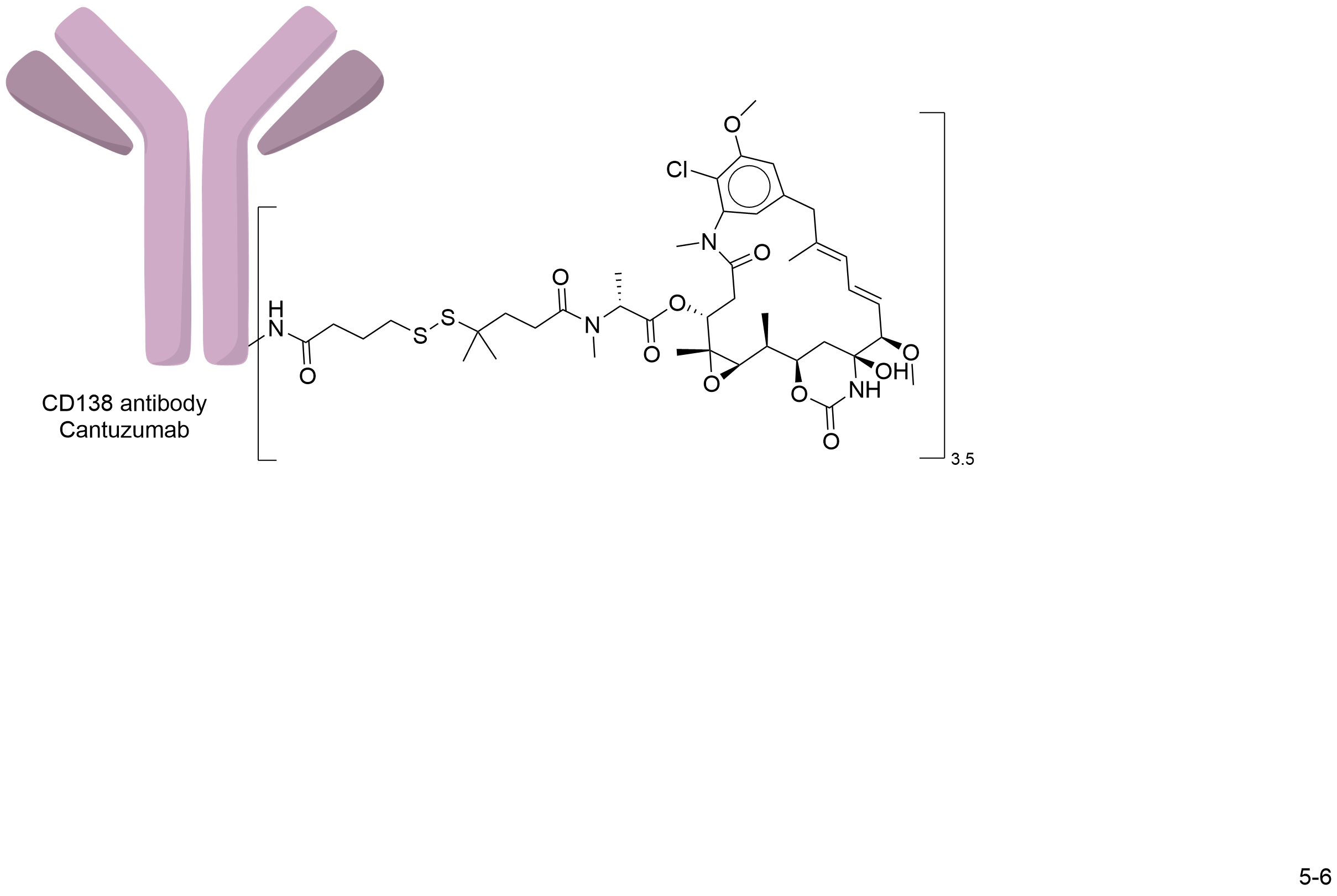
|
|||||
| Antibody Name |
Cantuzumab
|
Antibody Info | ||||
| Antigen Name |
Mucin-1 (MUC1)
|
Antigen Info | ||||
| Payload Name |
DM4
|
Payload Info | ||||
| Payload Target |
Microtubule (MT)
|
Target Info | ||||
| Linker Name |
N-succinimidyl 4-(2-pyridyldithio) butanoate (SPDB)
|
Linker Info | ||||
| Conjugate Type |
Random Lysines
|
|||||
| Combination Type |
ravtansine
|
|||||
2027 Update
The disease landscape of This ADC
2027 Update
The clinical trial pipelines of This ADC
| Disease Name | Phase 1 | Phase 2 | Phase 3 | Approved |
|---|---|---|---|---|
| Gastroesophageal junction adenocarcinoma | ||||
| Gastric cancer | ||||
| Colorectal cancer | ||||
| Pancreatic cancer | ||||
| Unspecific solid tumor |
General Information of The Activity Data Related to This ADC
Identified from the Human Clinical Data
Discovered Using Cell Line-derived Xenograft Model
| Standard Type | Value | Units | Cell Line | Disease Model |
|---|---|---|---|---|
| Tumor Growth Inhibition value (TGI) |
≈ 48.85
|
%
|
MOLP-8 cells
|
Plasma cell myeloma
|
Full List of Activity Data of This Antibody-drug Conjugate
Identified from the Human Clinical Data
| Experiment 1 Reporting the Activity Date of This ADC | [1] | ||||
| Patients Enrolled |
Eligible patients must have histologically confirmed, CanAg-positive (≥75% tumor cells with 2+/3+ staining) non-colorectal/pancreatic solid tumors that are inoperable/metastatic and refractory to standard therapy, excluding those with leptomeningeal or progressive brain disease. Key requirements include ECOG 0-2, adequate organ function (ANC ≥1,500/mm <sup>3</sup>, platelets ≥100,000/mm <sup>3</sup>, creatinine ≤1.5 mg/dL), no active infections, and ≥4-week washout from prior therapies. Strict exclusion criteria address comorbidities, concurrent malignancies, and treatment-related restrictions to ensure patient safety.
Click to Show/Hide
|
||||
| Administration Dosage |
Thirty patients were treated with huC242-DM4, receiving a single intravenous (IV) infusion once every three weeks. Cohorts of 3 patients initially were enrolled on each dose level. Patients have received huC242-DM4 at 18, 36, 60, 90, 126, 168, 223, and 297 mg/m2.
|
||||
| Related Clinical Trial | |||||
| NCT Number | NCT00352131 | Clinical Status | PHASE1 | ||
| Clinical Description | A Phase I Study to Assess the Safety and Pharmacokinetics of huC242-DM4 Administered as a Single Intravenous Infusion Once Every Three Weeks to Subjects With Solid Tumors | ||||
| Primary Endpoint |
The primary study objectives focus on assessing dose-limiting toxicities and determining the maximum tolerated dose of the investigational agent, with both measures being evaluated throughout the trial duration.
|
||||
| Other Endpoint |
Secondary endpoints involve comprehensive evaluation of toxicity profiles, pharmacokinetic properties, and antitumor activity, all monitored continuously during the trial period to assess treatment safety and preliminary efficacy.
|
||||
| Experiment 2 Reporting the Activity Date of This ADC | [2] | ||||
| Patients Enrolled |
ligibility requires histologically confirmed metastatic/locally advanced gastric/GEJ adenocarcinoma (AJCC IIIA-IV) with CanAg-positive expression, ECOG PS<1, one prior chemotherapy line failure, measurable disease per RECIST, and adequate organ function (ANC>1,500/mm <sup>3</sup>, platelets>100,000/mm <sup>3</sup>, creatinine≤1.5xULN). Key exclusions include active infections, grade≥2 neuropathy, CNS metastases, recent malignancies (<2yrs disease-free except non-melanoma skin/cervical CIS/prostate cancer), concurrent anticancer therapies, and significant comorbidities (uncontrolled diabetes, recent MI, heart failure). Reproductive-age patients require negative pregnancy testing and contraception compliance.
Click to Show/Hide
|
||||
| Administration Dosage |
dose of 126 mg/m2 or 168 mg/m2 given as IV once every 3 weeks
|
||||
| Related Clinical Trial | |||||
| NCT Number | NCT00620607 | Clinical Status | PHASE2 | ||
| Clinical Description | A Phase II, Open Label, Multiple Center Study of huC242-DM4 Given as an Intravenous Infusion Once Every Three Weeks to Patients With Metastatic Gastric or Gastroesophageal Junction Carcinomas | ||||
| Primary Endpoint |
The primary endpoint of the study is assessment of objective response rate, with evaluation conducted annually throughout the trial period to determine treatment efficacy.
|
||||
| Other Endpoint |
Secondary endpoints include duration of response, progression-free survival, safety/tolerability profile, pharmacokinetic analysis, and tumor FDG uptake effects-all monitored continuously during the study to characterize treatment durability, safety, pharmacologic properties, and metabolic impact.
|
||||
| Experiment 3 Reporting the Activity Date of This ADC | [3] | ||||
| Related Clinical Trial | |||||
| NCT Number | NCT00620607 | Clinical Status | Phase 2 | ||
| Clinical Description | A phase 2, open label, multiple center study of HUC242-DM4 given as an intravenous infusion once every three weeks to patients with metastatic gastric or gastroesophageal junction carcinomas. | ||||
| Experiment 4 Reporting the Activity Date of This ADC | [4] | ||||
| Patients Enrolled |
Metastatic or inoperable colorectal, pancreatic, and other CanAg-expressing tumors who have failed standard therapy (about 95% of pts. had received = 4 prior chemotherapy regimens).
|
||||
| Administration Dosage |
A single intravenous (IV) infusion once every three weeks, 18, 36, 60, 90, 126, 168, 223, and 297 mg/m2.
|
||||
| Related Clinical Trial | |||||
| NCT Number | NCT00352131 | Clinical Status | Phase 1 | ||
| Clinical Description | A phase 1 study to assess the safety and pharmacokinetics of huC242-DM4 administered as a single intravenous infusion once every three weeks to subjects with solid tumors. | ||||
| Primary Endpoint |
HuC242-DM4 was well tolerated at the 168 mg/m2 dose level. The MTD is not yet defined.
|
||||
| Other Endpoint |
No clinically significant myelosuppression and no formation of antibody to humanized antibody (HAHA) or drug (HADA).
|
||||
| Experiment 5 Reporting the Activity Date of This ADC | [5] | ||||
| Related Clinical Trial | |||||
| NCT Number | NCT00352131 | Clinical Status | Phase 1 | ||
| Clinical Description | A phase 1 study to assess the safety and pharmacokinetics of huC242-DM4 administered as a single intravenous infusion once every three weeks to subjects with solid tumors. | ||||
Discovered Using Cell Line-derived Xenograft Model
| Experiment 1 Reporting the Activity Date of This ADC | [6] | ||||
| Efficacy Data | Tumor Growth Inhibition value (TGI) | ≈ 48.85% | Positive CD138 expression (CD138 +++/++) | ||
| Method Description |
MOLP-8 cells (1.5x10⁷ cells per mouse) suspended in a 50:50 mixture of serum free media and matrigel were injected subcutaneously in the area under the right shoulder in 100 ul. Nine groups (n=6) were treated with a single intravenous injection of ADCs, each at doses of 250 ug/kg.
|
||||
| In Vivo Model | MOLP-8 CDX model | ||||
| In Vitro Model | Plasma cell myeloma | MOLP-8 cells | CVCL_2124 | ||
References